Subscribe to The Informer for monthly expert analysis, and to Events for advance notice of visiting world leaders and distinguished guests.
You may unsubscribe from Lowy Institute newsletters at any time. For information on our privacy practices and how to unsubscribe, see our Privacy Policy.
Newsletters
Subscribe to The Informer for monthly expert analysis, and to Events for advance notice of visiting world leaders and distinguished guests.
You may unsubscribe from Lowy Institute newsletters at any time. For information on our privacy practices and how to unsubscribe, see our Privacy Policy.
Taiwan Flashpoint: What Australia Can Do to Stop the Coming Taiwan Crisis | Lowy Institute
Taiwan Flashpoint: What Australia Can Do to Stop the Coming Taiwan Crisis
Australian diplomacy could ease rising tensions across the Taiwan Strait, if Australian policymakers rediscovered an appetite for involvement in the flashpoint.
Tensions between Taiwan and China are rising, driven in part by an increasingly assertive government in Beijing, growing Taiwanese estrangement from the Chinese mainland, and deteriorating US–China relations.
If key regional governments fail to help de-escalate tensions, the consequences are likely to be serious.
Rather than continue the debate about Australia’s position on its ANZUS obligations should the United States invoke the treaty in a Taiwan conflict, Australia should work with other regional powers to advocate for more robust risk avoidance and crisis management mechanisms.
EXECUTIVE SUMMARY
What is the problem?
A major strategic crisis is brewing across the Taiwan Strait, one which threatens to be significantly more serious than earlier crises of the 1950s and mid-1990s. Current tensions between China and Taiwan, and the fear that a major conflict could erupt, are generally attributed to Beijing’s growing assertiveness. However, these tensions are ultimately the product of changes in the dynamics of the triangular relationship between China, Taiwan and the United States and, most importantly, the balance of military power underpinning those ties. These tensions have sparked renewed debate in Australia over whether conflict would trigger Australia’s obligations under the ANZUS alliance.
What should be done?
Australian policymakers should be doing much more to head off the possibility of a Taiwan conflict, heeding the diplomacy of the Menzies government during the 1954–55 Taiwan Strait Crisis. Given the high stakes involved, this policy brief argues for a more activist Australian diplomacy in advocating crisis management and avoidance mechanisms designed both to reduce the risk of inadvertent conflict and to manage a full-blown Taiwan crisis.
Introduction
After decades of relative stability, tensions have returned to the longstanding Taiwan flashpoint. They threaten to intensify still further following Tsai Ing-wen’s landslide victory in Taiwan’s January 2020 presidential election. The potential for a regional security crisis is becoming less remote.
Beijing froze all diplomatic ties with the island from the beginning of Tsai’s first term in 2016. This was after she and her independence-leaning Democratic Progressive Party (DPP) rejected the so-called ‘1992 consensus’ — a murky cross-strait compromise which implies that Taiwan is part of China.
China’s president, Xi Jinping, could stay this course, pressuring the island economically, diplomatically and militarily. Or he could up the ante, employing actual military force in an effort to compel Taiwan back into the mainland’s embrace. But whichever path Xi chooses, the risk of a major strategic crisis — and possibly even conflict — will continue to rise.
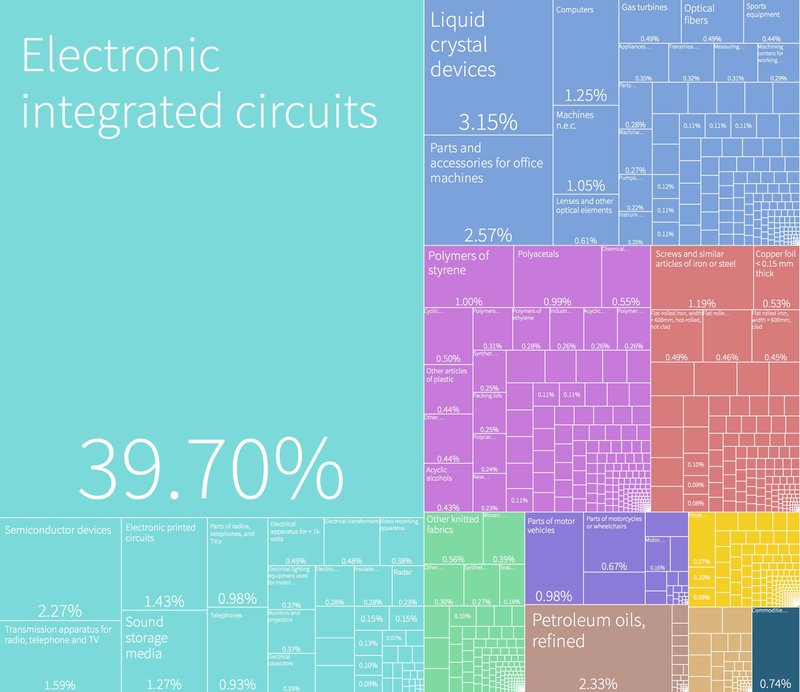
The stakes for Canberra are high. Taiwan is a critical link in global supply chains, as a provider of advanced manufacturing. Some of Australia’s largest trading partners (China, Japan and South Korea) share the island’s Northeast Asian neighbourhood. Major conflict could swiftly reverse this region’s economic miracle, triggering an Australian recession given our considerable trade dependence upon China, with serious consequences for the Australian economy and standard of living.
Taiwan's exports in 2017, The Growth Lab at Harvard University,"Growth Projections and Complexity Rankings" (2019), http://atlas.cid.harvard.edu/.
There are a number of potential consequences for Australia should a crisis emerge. If the United States came to Taiwan’s defence, Washington might invoke the ANZUS Treaty and request Canberra’s assistance. China could retaliate by taking punitive measures against Australian exports as it did in response to Seoul’s installation of the THAAD missile defence system. Australia’s Taiwanese diaspora — concentrated in Brisbane and numbering in the “tens of thousands” — could take to the streets, inspired by the globalisation of Hong Kong’s crisis. Beijing’s supporters in Australia would almost certainly respond in kind.
Canberra’s stance on Taiwan remains reactive. The last major Australian policy statement came in August 2004, when Foreign Minister Alexander Downer said the ANZUS Treaty was “symbolic” and might not apply to a Taiwan conflict. Even then, Downer’s statement was an unscripted response to a journalist’s question rather than a considered policy announcement.
Canberra’s ability to proactively reduce the risk of a Taiwan crisis or help shape the course of cross-strait relations is rarely, if ever, contemplated. Indeed, a recent report by Lowy Institute researchers Natasha Kassam and Richard McGregor concludes that “Australia has no interest, or indeed ability, to be a decisive player in the Taiwan dispute”.
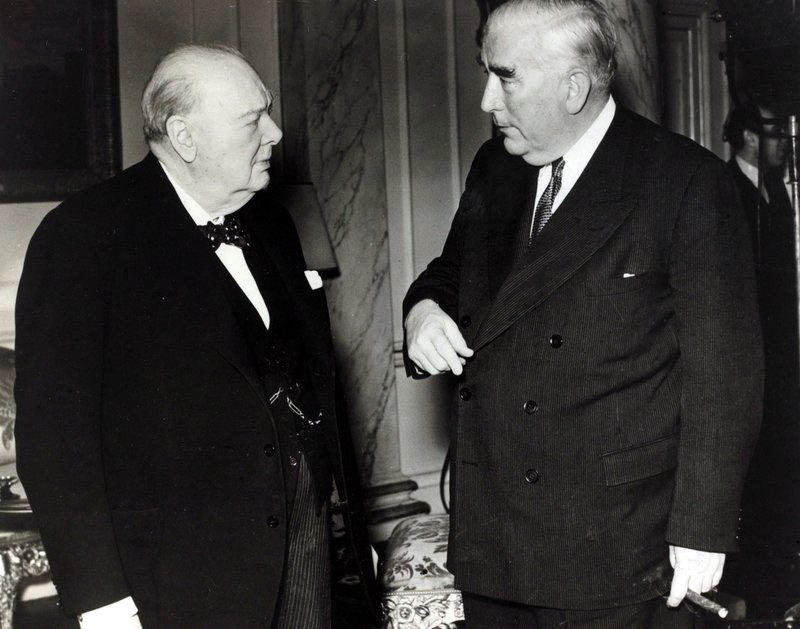
This conventional wisdom is contestable. It contrasts sharply with Australia’s role in the first Taiwan Strait Crisis of 1954–55, when the Menzies government used its alliance channels to vigorously advocate a series of diplomatic proposals designed to avert major conflict. During that earlier episode Canberra also consulted and coordinated its approach with other like-minded governments, most notably London, Ottawa and Wellington.
Winston Churchill meets Robert Menzies at the Commonwealth Conference of Prime Ministers, London, January 1955; image courtesy of Getty.
Drawing inspiration from the Menzies era and in light of the growing risk of crisis, this policy brief argues that the Morrison government should be much more proactive. Australia should move past the well-worn, but ultimately unproductive, debate over whether ANZUS would apply in a Taiwan conflict. Instead, the brief argues that Canberra should advocate, in collaboration with similarly affected regional partners, for more robust arrangements for managing and, ideally, avoiding the coming Taiwan crisis.
The Gathering Storm
The large-scale and persistent street protests in Hong Kong, triggered by an extradition bill introduced to Hong Kong’s legislature by the Beijing-backed government, marked 2019 as the year in which China’s ‘one country, two systems’ formula for governing Hong Kong’s relationship with Beijing unravelled. Yet the year began with a major speech by Chinese president Xi Jinping in which he argued the merits of this same model for Taiwan: “The principles of ‘peaceful reunification’ and ‘one country, two systems’ are the best approach to realizing national reunification,” the China Daily reported Xi as saying. In the same speech, Xi also refused to rule out the use of military force if Taipei failed to sign on to Beijing’s preferred approach.
Deng Xiaoping — China’s paramount leader from 1978–1992 and sometimes dubbed the “architect of modern China” — actually had Taiwan in mind when he first proposed the ‘one country, two systems’ formula. But the Taiwanese, then under Kuomintang (or KMT) rule, rejected this suggestion. This resulted in ‘one country, two systems’ instead becoming part of the December 1984 Sino–British Joint Declaration, which outlined arrangements for Hong Kong’s handover in July 1997. Recent events in Hong Kong have only reinforced Taiwan’s initial scepticism of ‘one country, two systems’. Responding directly to Xi’s January 2019 address, Tsai replied that her constituents are “resolutely opposed” to such an arrangement and that Xi “must face the reality of the existence of the Republic of China (Taiwan)”.[13] She reiterated this message in an October 2019 National Day address, observing that opposition to ‘one country, two systems’ is now “the overwhelming consensus among Taiwan’s 23 million people … regardless of party affiliation or political position”.
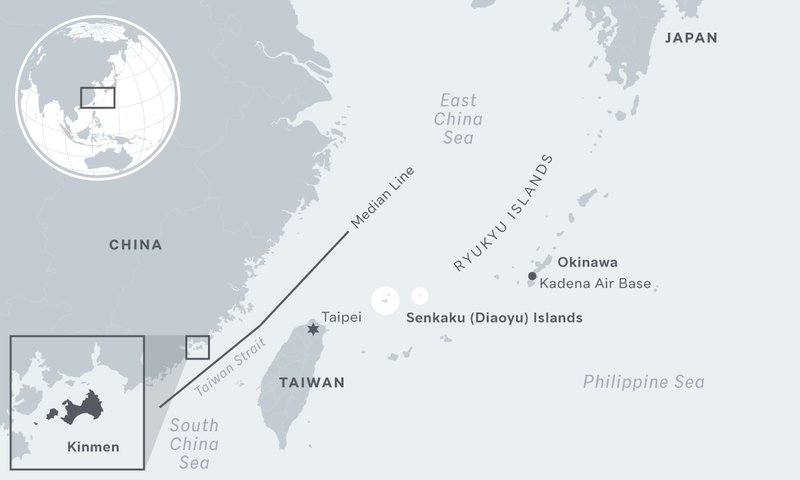
Australian commentators routinely lay blame for growing tensions over Taiwan squarely with Xi. Up to a point, their criticisms are valid. In March 2019, for instance, two Chinese J-11 fighters deliberately violated the Taiwan Strait’s tacitly acknowledged median line for the first time in two decades, sparking a brief standoff. In June, Chinese Defence Minister Wei Fenghe sent shockwaves through the Shangri-La Dialogue in Singapore when he asserted that “if anyone dares to split Taiwan from China, the Chinese military has no choice but to fight at all costs for national unity”. In late July, an unidentified Chinese naval vessel collided with a Taiwanese freighter near Taiwan-controlled Kinmen Island, sparking another cross-strait standoff. And in February 2020, Chinese planes — this time including an unspecified number of powerful H-6 strategic bombers — again crossed the median line, prompting Taiwan to scramble F-16 fighters.
But Taipei, too, is challenging the uneasy cross-strait status quo which, until now, has largely kept the peace. In May 2019, for instance, Taiwan’s Foreign Minister Joseph Wu provocatively tweeted that “Democratic #Taiwan is a country in itself & has nothing to do with authoritarian #China”. In July 2019, Tsai spent four nights in the United States (the longest ‘transit’ to date by a Taiwanese leader) meeting with members of congress, senators, a governor and conducting a press briefing — another first — during her stay. In February 2020, Vice President-elect William Lai then became the highest ranking Taiwanese representative to visit the US capital, Washington DC, in four decades, participating in an invitation-only event where President Donald Trump was also in attendance. Lai, Tsai’s running mate in the 2020 presidential election, is a self-described “Taiwan independence worker”. He challenged her in June 2019 to become the Democratic Progressive Party’s (DPP) presidential nominee, losing by 8.19 per cent (35.67 per cent to 27.48 per cent). The closeness of this result, and Lai’s place on Tsai’s ticket, reflects so-called “deep green” pro-independence pressures within the party.
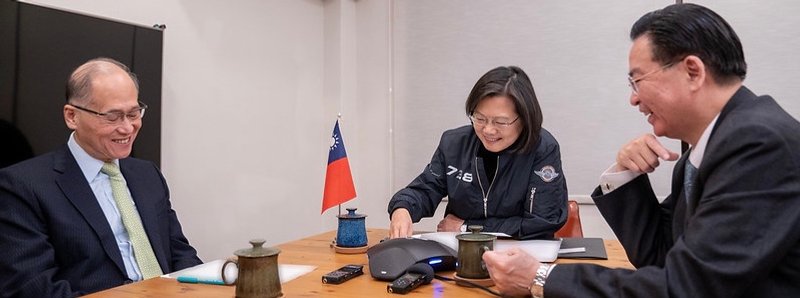
David Lee, National Security Adviser, President Tsai and Foreign Minister Joseph Wu receive acongratulatory phone call from US Senator Cory Gardner upon Tsai's 2020 election victory.Image courtesy of the Office of the President, Republic of China (Taiwan).
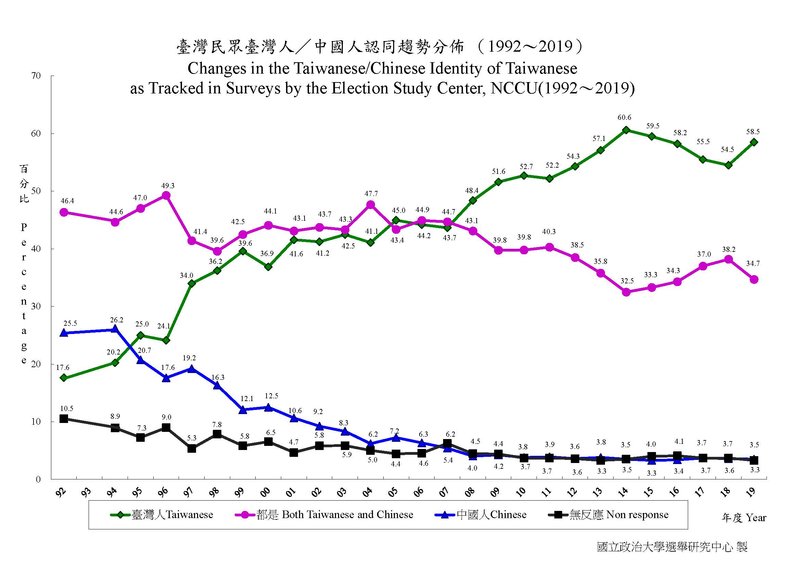
Taiwan’s 23 million inhabitants are, without question, becoming increasingly estranged from the mainland. A February 2020 poll conducted by Taiwan’s National Chengchi University, for instance, found that a record number (58.5 per cent) of the voting public now regard themselves as exclusively “Taiwanese”. In contrast, a mere 3.3 per cent of those polled identified as “Chinese”. Anti-unification sentiments are becoming even more pronounced among Taiwan’s younger generations. According to another reputable poll, 70.3 per cent of Taiwanese under 40 would be willing to fight to defend the island should Beijing attempt its forceful annexation, while an even higher 73.3 per cent expressed opposition to unification with the mainland even in the unlikely event that China became a democracy.
Graph showing changes in perceptions of Taiwanese identity from 1992 to 2019,Election Study Center, National Chengchi University.
Taipei feels emboldened in part because the island’s relationship with Washington is the closest it has been since the 1970s, when the normalisation of US–China relations forced the severing of Taiwan’s alliance with the United States. In March 2018, for instance, President Donald Trump signed the Taiwan Travel Act into law. This non-binding legislation encourages US officials at all levels of government to meet with their Taiwanese counterparts, more openly facilitating interactions which have either not occurred previously or that have been conducted in secret. New multi-billion dollar US arms sales to the island — including F-16V fighters (the most advanced variant of that aircraft) and Abrams tanks — were approved in 2019. United States Navy ships now transit through the Taiwan Strait monthly, while in February 2020 the United States also flew two B-52 bombers close to Taiwan following China’s crossing of the median line days earlier. Perhaps most controversially, however, the US Department of Defense broke with tradition by specifically referring to Taiwan as a country in its June 2019 Indo–Pacific Strategy Report.
There have also been shifts in the cross-strait military balance, with the result that a Chinese attack cannot be ruled out. Beijing was previously deterred from this course by the possibility of US intervention. Taiwan’s military also held an edge over the mainland’s large, land-focused forces until as recently as the mid-1990s. But there now remains little left to speak of in the way of a cross-strait military balance, Taiwan’s recent weapons purchases from the United States notwithstanding. Strikingly, with over 300 ships the People’s Liberation Army Navy (PLAN) has now quantitatively overtaken even its US counterpart to become the world’s largest. Over 70 per cent of this burgeoning fleet is classified as “modern”. Further, China’s development of so-called ‘anti-access, area-denial’ (A2/AD) capabilities has raised questions as to whether the United States will indefinitely retain the ability to intervene in a Taiwan conflict. This is an area where geography overwhelmingly favours China. Taiwan is 11,000 kilometres away from continental United States. It sits a mere 160 kilometres from mainland China.
Taiwan, China, the "Median Line" and the Ryukyu Islands.
None of this is to suggest that Xi wants war. He is aware of how risky an amphibious invasion would be, especially across the Taiwan Strait’s turbulent waters and given the island’s inhospitable landing terrain. Defeat in a Taiwan conflict could amount to political suicide for Xi, calling into question his signature ‘China Dream’ and possibly even the legitimacy of the Chinese Communist Party (CCP).
But history shows that wars are often the product of misperception and miscalculation, with accidents and other acts of inadvertent escalation sometimes driving the course of events. Taiwan is increasingly susceptible to such a scenario. As the skies and the waters around the island become increasingly crowded and contested, the risk that military ships or aircraft might collide in the wrong place or at the wrong time is growing. China’s March 2019 incursion across the tacitly acknowledged median line is indicative. So, too, was Taiwan’s misfiring, on 1 July 2016, of an anti-ship missile in the direction of the mainland. On that occasion the missile struck a Taiwanese fishing boat, killing its captain.[34]But what if this episode had occurred five years later, in the emotionally charged atmosphere of the hundredth anniversary of the CCP? And what if the missile had instead struck a Chinese vessel?
The Wrong Debate
While it is impossible to know in advance how any war might originate or play out, the RAND Corporation has usefully modelled some of the alternative pathways that a US–China conflict over Taiwan might take, and the costs that each may entail. Significantly for Australia, RAND has estimated that a year of severe conflict with the United States would put the Chinese economy into freefall. Its GDP could fall by 25–35 per cent after one year of a “severe war”, while its trade with the region would decline by 80 per cent. China, of course, is Australia’s leading two-way trading partner, with an estimated 34 per cent of Australian exports going there. A serious Chinese economic downturn would almost certainly trigger a recession here.
Yet Australian policymakers rarely raise the prospect of a Taiwan conflict. Partly, this is probably a deliberate strategy of ‘lying low’, given the tenuous state of Australia–China relations and Australia’s economic dependence on its major trading partner. However, when the topic of Taiwan periodically enters the Australian public discourse, the conversation typically returns to the question of whether ANZUS would apply. The debate was resurrected in early 2019, for instance, by strategic commentators Paul Dibb and Hugh White. According to Dibb, the United States would almost certainly come to Taiwan’s defence in the event of a cross-strait conflict, because to do otherwise would undermine the credibility of its Asian alliances. And if Washington asked Canberra for a military contribution, Dibb maintains that we, too, would have little choice other than to comply, because “[if] Australia refused to be involved, the very existence of the ANZUS alliance would be at risk”. White disagrees, contending that the United States would rather retreat from Asia than risk a nuclear exchange with China. And even if that assessment proves wrong, he argues that Australia should not support the United States in a conflict it stands little chance of winning.
But this is the wrong debate to be having. Should the United States decide to intervene militarily in a Taiwan contingency and request Australian assistance, it is almost certain Canberra would comply, given our high level of dependence upon the United States for intelligence access, military technology and, indeed, the very defence of the continent. White recently estimated that Australia would need to almost double its current defence budget absent the US alliance. It is far from clear that the Australian public would be willing to stomach the budget consequences or the substantial taxation hike that would be needed to fund such an increase.
It is thus no coincidence that Australian forces have fought alongside their US counterparts in every major conflict since the First World War. We remain, as Coral Bell famously put it during the 1980s, a “dependent ally”. Yet if White is right and America ends up abdicating its role in the region rather than confronting China, then Taiwan’s annexation — peaceful or otherwise — is a foregone conclusion. No other power, either now or into the foreseeable future, will have either the political will or the military weight to take on China in a conflict over Taiwan without the United States.
Given the high stakes involved, the question Australian policymakers should instead be asking is what, if anything, Canberra can do to reduce the risk of conflict erupting in the first place. Canberra should not, according to analysts Rod Lyon and Michael Shoebridge, counsel US restraint or signal in advance that Australia would respond unfavourably to a US call for help in a Taiwan conflict. Doing so, they contend, would weaken the deterrent effect that possible external intervention in a Taiwan contingency has upon China. Instead, they suggest that the “prospect of a protracted, bloody conflict” with the United States and others (including Australia) needs to remain foremost in Beijing’s mind. This would require the United States and its allies to actively signal their potential involvement in a Taiwan conflict, with a view to deterring Chinese moves against Taiwan.
But this alternative is ill-advised, even though calls for America and its allies to strengthen their deterrence postures vis-à-vis Taiwan have grown louder with the intensifying strategic competition between China and the United States. At their most extreme, these calls invoke a return to arrangements at the height of the Cold War, when Taiwan enjoyed a formal military alliance with the United States and America stationed US troops on the island. There have also been suggestions that the US military make regular port calls in Taiwan and undertake naval exercises with allies in its surrounding waters. The United States has encouraged allies to follow its lead by making regular ‘freedom of navigation’ transits through the Taiwan Strait, which the Australian, Canadian and French navies have already done.
With US–China relations now descending towards what some call a “new Cold War”, however, such an ‘enhanced deterrence’ strategy carries significant risks. It could generate a ‘vicious’ security dilemma in which “one or both sides may become so frightened (or provoked by the other side, objectively or subjectively) that they may decide that their security now requires them to pursue aggression”. Even if US policymakers see this as a risk worth taking, the strategy relies on Beijing believing that Washington will come to Taiwan’s defence, and this is far from clear. Beijing’s doubts about American resolve to defend Taiwan pre-date even the avowedly ‘America first’ Trump administration: the lack of a US response to Russia’s 2014 annexation of Crimea reportedly made a deep impression on Xi. In March 2018, the state-owned People’s Daily — an authoritative guide to the CCP official position — gloated that “America will sell Taiwan out in the blink of an eye”.
What Should Australia Do?
Australia should advocate for more robust crisis avoidance, management and confidence-building, rather than focusing on our alliance obligations or lying low due to the fragile state of Sino–Australian relations. The costs and risks of a Taiwan conflict significantly outweigh those of taking such measures.
Policy Recommendation 1: The Australian Government should advocate for more robust crisis management and risk avoidance mechanisms
Elsewhere in Asia, measures are increasingly being put in place to reduce the risk of inadvertent escalation and for managing strategic crises. Most headway has been made on the Korean Peninsula, where the leaders of the North and South can now communicate directly via a crisis hotline. As part of the 2018 inter-Korean peace process, Seoul and Pyongyang have established no-fly zones along their shared land border and now avoid potentially provocative military exercises within the de-militarized zone dissecting the two countries. After a decade of sometimes difficult negotiations, China and Japan have also recently introduced a new ‘communication mechanism’ to reduce the risk of accidental clashes between military ships and aircraft operating in the East China Sea. This includes a crisis hotline to facilitate communication between senior Chinese and Japanese defence officials.
Such measures are missing in the cross-strait relationship. A decade ago, when the more pro-Chinese KMT last held power, hopes were high that they could be put in place. During the presidency of Ma Ying-jeou (2008–2016), Taiwan signed more than 20 economic agreements — a confidence-building measure of sorts — with the mainland. At Ma and Xi’s historic November 2015 meeting in Singapore, the two leaders even agreed to establish a new cross-strait crisis hotline which was then used by senior officials from both sides on at least four occasions in early 2016. But the Chinese side is reportedly no longer answering this hotline, following its cross-strait freeze after Tsai’s inauguration.
Reactivating the cross-strait hotline would be a good start in assisting de-escalation and crisis management. But more is needed. Beijing and Taipei should also agree on more formal protocols for communicating during a major crisis, including back-up procedures should these primary channels fail or become interrupted by the use of military force.
Cross-strait crisis management currently relies on unspecified, informal channels of communication. As Tsai noted in her first foreign media interview after becoming president: “we have always had diverse channels of communications across the strait. These include not just official communications but also people-to-people contacts.”
Informal diplomatic channels certainly have their place, as shown most famously by exchanges between the Soviet intelligence officer Alexander Fomin and US diplomatic correspondent John Scalie during the height of the Cuban Missile Crisis. Yet, as in a game of Chinese whispers, messages can also get lost or confused in the heat of crisis. In the early 1950s, for instance, Washington’s failure to correctly interpret Chinese anxieties being conveyed through Indian intermediaries resulted in an expansion of the Korean War.
China and America would also benefit from more clearly defined crisis management protocols. Their agreements to date — including a November 2014 memorandum of understanding for rules of behaviour during air and maritime encounters — are focused predominantly at the military-to-military level. But history shows that civilian and civil-military interactions are equally, if not more, important in a crisis. The development and implementation of mechanisms for managing Sino–American civilian and civil–military interactions during a Taiwan crisis are critical.
Policy Recommendation 2: Australia should collaborate with other like-minded, trade-dependent nations such as Japan and Singapore to advocate risk-reduction measures
Canberra should not advocate for these risk reduction measures alone. Beijing is unlikely to respond favourably to a unilateral proposal. Australia could even be singled out for coercive treatment should Beijing resent Canberra’s interference in what it regards as an internal matter.
Japan is an attractive partner. In a Taiwan conflict, Tokyo, like Australia, would be placed in an unenviable position between its leading trading partner and its longstanding strategic ally. United States military bases in Japan would be an obvious target for Beijing in the opening stages of a Taiwan conflict. The increasingly integrated nature of US and Japanese military systems — such as the string of underwater sensors running from the Ryukyu Islands across to Taiwan, which are critical to tracking Chinese submarines — also increase the risk of Tokyo being dragged into a conflict.
Singapore is another strong possibility as a partner given its close relationship not only with Australia, but also China, Taiwan and the United States. Singapore positions itself as an even-handed regional player, as indicated most recently by Prime Minister Lee Hsien Loong’s May 2019 keynote address to the Shangri-La Dialogue, in which he was openly critical of both China and the United States. Singapore also has a track record of creative, activist diplomacy, as evidenced by its hosting of the June 2018 summit between Trump and North Korean leader Kim Jong-un.
Coordination with these and other regional governments will not be easy. Each one perceives the potential threat posed by China’s growing power and influence — and the possibility of a Taiwan conflict — in subtly different ways. But Canberra should not seek to progress this initiative in the absence of support from at least one other regional government.
Policy Recommendation 3: Australian advocacy should initially be low key
A senior Australian public servant, such as the Secretary of the Department of Foreign Affairs and Trade (DFAT), could test risk reduction proposals with prospective regional partners. Meanwhile, the government should establish a small task force to identify the most appropriate crisis management and avoidance mechanisms for a contemporary Taiwan contingency. This task force should draw upon DFAT, Department of Defence, and Australian Defence Force (ADF) expertise.
Key to Australia’s success in shaping the Cambodian peace process during the early 1990s were the soundings that then-DFAT Deputy Secretary Michael Costello took, at Foreign Minister Gareth Evans’s instruction, in thirteen other countries during a three week period in December 1989. Low-key proposals kept initially at the departmental level have the advantage of being easier to retreat from should other regional governments not be supportive. The contrasting case is the Rudd government’s ill-fated ‘Asia–Pacific community’ proposal, advanced initially by the prime minister in a major speech and then belatedly followed up with regional consultations led by foreign affairs grandee Richard Woolcott.
Like Costello, who subsequently went on to head the department, current DFAT Secretary Frances Adamson is an impeccably qualified candidate. She is widely respected and appropriately experienced, having served as head of Australia’s mission in Taiwan (from 2000–2005), as ambassador to China (2011–2015) and as foreign policy adviser to Prime Minister Malcolm Turnbull (2015–16).
The next Taiwan Strait crisis could, however, play out very differently from previous episodes. The globalisation of the Hong Kong crisis provides a pointer. Previously, in a world where leaders and their governments could not communicate via mobile phone nor make their views known publicly via social media, they did not face the same time pressures and could make their decisions away from the public eye. Such crises were often less confusing and complex as a consequence. An Australian Government task force should therefore consider whether traditional crisis management and avoidance mechanisms remain fit to withstand the potentially quite different pressures of a contemporary Taiwan crisis or whether other new or adapted arrangements might be required. If so, what might these be?
♦
Crisis management and avoidance mechanisms are typically not controversial. At the height of the Cold War, the United States and Soviet Union developed and used such arrangements, most famously in the immediate aftermath of the Cuban Missile Crisis when a high-level hotline connecting the Kremlin and the Pentagon was established.
Nonetheless, Australian advocacy of such measures will not be without risk — particularly on an issue that Beijing sees as a strictly internal matter. When the incoming Howard government was, along with Japan, the only other nation from the region to publicly support President Bill Clinton’s deployment of aircraft carriers during the 1995–96 Taiwan Strait Crisis, it resulted in what one analyst has described as “arguably the most abysmal year in the history of Australia–China relations”.
Calls for Australia to assume a more active and assertive foreign policy — reminiscent of that pursued by the Hawke–Keating government of the late 1980s and early 1990s — have grown louder in recent years. This sentiment has now been picked up by both sides of Australian politics. In his October 2019 Lowy Institute Lecture, for instance, Prime Minister Scott Morrison asserted: “Australia cannot be an indifferent bystander to these events which impact our livelihoods, our safety and our sovereignty. We must, as we have done previously, cultivate, marshal and bring our influence to bear to protect and promote our national interests.” In a similar vein, in a September 2019 speech delivered in Jakarta, Shadow Foreign Minister Penny Wong observed: “countries of our region must do more than simply navigate the slipstream. We must do what we can to shape the outcome we want.”
Drawing inspiration from the Menzies government’s diplomacy during the Taiwan Strait Crisis of 1954–55, there is arguably no more pressing issue today where Australian foreign policy activism is warranted. Lying low may seem the more prudent course, particularly given the degree of difficulty involved and the present fragile state of Australia–China relations. But should a Taiwan conflict erupt, with the severe consequences that such a serious conflict would inflict on Australia’s economy and security, this country’s leaders will wish they had tried harder to prevent it.
Acknowledgements
The author acknowledges the input and support of Richard Rigby, Gareth Evans, Rowan Callick, Michael Fullilove, Alex Oliver, Sandra Rigby, Sam Roggeveen, and two anonymous reviewers, as well as several Australian Government officials who spoke on condition of anonymity.
Cover image
An H-6 bomber of Chinese PLA Air Force flies near a Taiwan F-16, 10 February 2020; Taiwan Ministry of National Defense/Photo Handout via Reuters.
About the Author
Dr Brendan Taylor is Professor of Strategic Studies at the Strategic and Defence Studies Centre, Australian National University. His latest book, Dangerous Decade: Taiwan’s Security and Crisis Management, was published by the International Institute for Strategic Studies (IISS) in September 2019. Dr Taylor was head of the Strategic & Defence Studies Centre at the Australian National University from 2011–2016. He is a specialist on great power strategic relations in the Asia–Pacific, East Asian ‘flashpoints’, and Asian security architecture. He has published works in The Washington Quarterly, International Affairs, Survival, Australian Foreign Affairs, Asia Policy, Review of International Studies and ThePacific Review. He is the author or editor of twelve books.