Subscribe to The Informer for monthly expert analysis, and to Events for advance notice of visiting world leaders and distinguished guests.
You may unsubscribe from Lowy Institute newsletters at any time. For information on our privacy practices and how to unsubscribe, see our Privacy Policy.
West Papua: The Issue That Won't Go Away for Melanesia
West Papuans continue to fight for independence with the support of many Pacific nations. Despite Indonesia’s opposition and the recent impact of COVID-19 on the region, the resolution of West Papuan grievances may have stalled but nationalist sentiment has not been quelled.
Indonesian government policies in West Papua, combining military control with an emphasis on economic development, have failed to quell West Papuan nationalist sentiment.
While West Papuan grievances with Indonesian rule, including the issue of human rights abuses, remain unresolved, concerns have grown across the Pacific region, particularly among Melanesian nations who seek a solution.
Indonesia’s increased connectivity with Pacific Islands countries has complicated regional efforts to address the West Papua issue, while the impact of COVID-19 adds further challenges.
Executive summary
West Papuan grievances with Indonesian rule, including human rights abuses, militarisation and frustrations about self-determination, have attracted increasing international attention and concern, particularly in neighbouring countries of Melanesia. The Melanesian Spearhead Group (MSG) comprising Papua New Guinea, Fiji, Solomon Islands, Vanuatu and New Caledonia’s Kanaks, is the appropriate regional grouping to pursue the issue, but struggles to achieve meaningful solutions. A rising Indonesia is gaining influence throughout the region, countering support for West Papuan independence aims, and MSG members have become divided over West Papua. But recent flare-ups between West Papuans and security forces, combined with steady international support for the West Papuan struggle, and the emergence of the United Liberation Movement for West Papua (ULMWP), foreshadowed a looming regional diplomatic wrestle.
The emergence of the COVID-19 pandemic appears likely to stall any peaceful resolution, with conflict in West Papua continuing at various flashpoints. Public health issues will take priority, and could distract attention from the West Papuan cause for some time. Despite this, West Papuan claims are unlikely to be abandoned.
Introduction: The stirring of West Papuan tensions
Since the fall of Suharto in 1998, Indonesia has undergone a broad process of reformation (reformasi). Under reformasi, Indonesia committed to promote democracy and regional autonomy, and promote and protect human rights as national priorities. There was much work to do.
When Suharto fell, there was excitement in West Papua — the Indonesian-ruled territory in the western half of New Guineaname="_ednref1"> — as in other parts of the republic. Three decades of Suharto’s policies had fuelled West Papuans’ resentment of Indonesian rule. Nationalist sentiment grew significantly.name="_ednref2">
The crux of West Papuan grievances was Indonesia’s incorporation of the territory in its post-colonial era. On Indonesia’s eventual independence in 1949, with a first attempt at proclamation in 1945, the departing Netherlands Government initially refused to transfer sovereignty to Indonesia over the western (Netherlands) part of New Guinea — now known as West Papua, whose name has undergone a confusing run of changes in the past six decades.name="_ednref3"> The nascent Indonesian state’s claim to West New Guinea was based on the argument that its territorial boundaries should match those of its predecessor, the Dutch East Indies,name="_ednref4"> of which West Papua was a large, resource-rich chunk. After a dispute which festered for more than a decade, Netherlands New Guinea was transferred to Indonesia under the 1962 New York Agreement.name="_ednref5"> The agreement stipulated a process under UN supervision to give the people of the territory the opportunity to express freedom of choice by ‘ascertaining’ their will.name="_ednref6"> However, the repressive rule of the Suharto regime soon resulted in frequent clashes between Indonesian security forces and West Papuan fighters.name="_ednref7"> The regime’s implementation of the New York agreement made minimal attempts to consult indigenous Papuans’ views, thus limiting their options for self-determination. The process culminated in 1969’s notorious Act of Free Choice, an engineered outcome which affirmed Indonesian sovereignty.name="_ednref8">
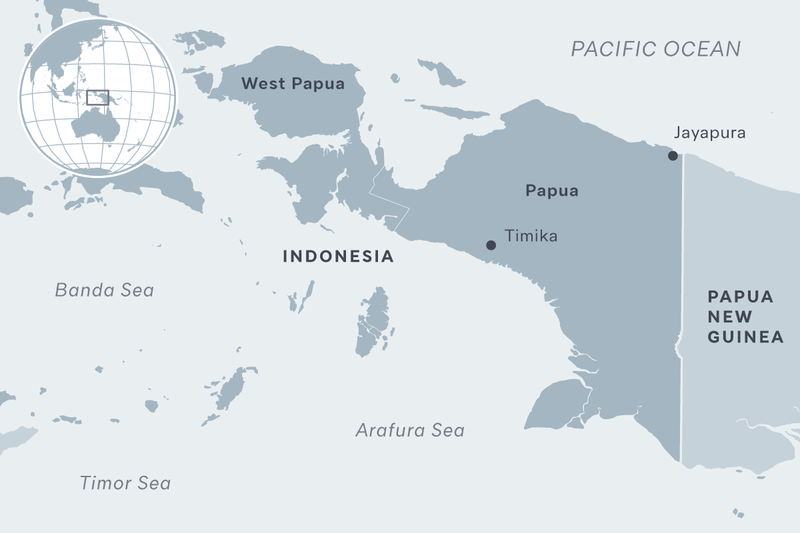
The Indonesian provinces of West Papua and Papua. Independence activists describe the combined provinces as West Papua.
Since 1969, Indonesia’s response to West Papuan nationalism has combined a Suharto-era military approach with an increasing emphasis on economic development in the republic’s remote and impoverished far eastern region. Neither approach has succeeded in containing West Papuan nationalist sentiment. Exploitation of West Papua’s abundant natural resources such as forests, minerals and gas — by foreign and national corporations, with assistance from Indonesian political and military interests — has alienated West Papuans from the traditional sources of their livelihoods. Together with a heavy Indonesian military presence, it has fuelled West Papuan resentment and helped West Papuan independence leaders galvanise broader support.
The transformation in Indonesian national politics in the post-Suharto reformasi era included a rapid procession of leadership changes as well as other disruptions, such as the crisis in East Timor and Indonesia’s eventual submission to a UN-sponsored independence referendum. This opened a democratic window for West Papuans pursuing self-determination, encouraged by concessions from Indonesian President Abdurrahman Wahid (Gus Dur). These concessions included allowing West Papuans to raise their banned nationalist Morning Star Flag, and to convene a series of consultations about West Papua’s future. This led to 2000’s landmark Second Papuan People’s Congress in Jayapura, in which West Papuan demands for independence were made clear.name="_ednref9"> Political groups and individuals broadly identifying as part of the West Papuan independence movement — generally known as the Organisasi Papua Merdeka (OPM), or Free Papua Movement — adopted a new strategy based on peaceful advocacy. This included international lobbying under the direction of the Papua Presidium Council, the independence grouping formed as a result of the congress.name="_ednref10"> Encouraged that the Indonesian president had allowed negotiations with the Free Aceh Movement in Indonesia’s other restive region, the Presidium felt able to enter into discussions with Wahid.name="_ednref11">
The ‘Papuan Spring’ of 1999 was brief. Indonesian authorities clamped down on pro-independence activities, and Wahid was succeeded by a hardline president, Megawati Sukarnoputri, who declared that without West Papua, “Indonesia is not complete”.name="_ednref12"> As Rodd McGibbon noted in 2006:
“Unlike the tiny, poverty-stricken island of East Timor, Papua comprises over one fifth of Indonesia’s land mass and is one of the country’s most resource-rich provinces. In contrast to Foreign Minister Ali Alatas’s description of East Timor as a ‘pebble in the shoe’, Jakarta has an enormous stake in defending its sovereignty over Papua.” normal;">
The Presidium leadership was soon decimated. Some members were arrested, others harassed. The chairman Theys Eluay, who emerged from the congress as a credible West Papuan leader, was assassinated by Indonesian Kopassus special forces officers in September 2001.name="_ednref14"> In the new climate of fear, “few were bold enough to air aspirations for merdeka (freedom) in public.”name="_ednref15">
Since its beginnings in 1965, the Free Papua Movement has been a largely peaceful umbrella movement. However, the movement’s military wing, the Tentara Pembebasan Nasional Papua Barat (TPNPB), continues to bear arms. Consisting of disparate factions across West Papua, particularly the Highlands and regions along the porous land border with Papua New Guinea, the TPNPB has launched sporadic attacks against Indonesian military forces which it regards as illegal occupiers of West Papua.
In the post-Suharto era, Indonesia’s National Armed Forces (TNI) have been central to securing Indonesian interests in West Papua.name="_ednref16"> Indonesian security forces have been supported in defence co-operation and counterterrorism efforts by partners including Australia and the United States.name="_ednref17">
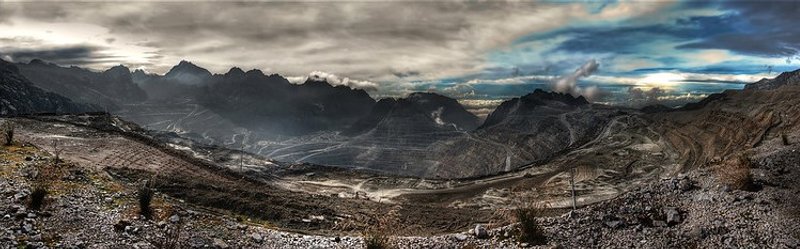
American interest in West Papua is long-standing. The enormous Grasberg gold and copper mine has been primarily owned and operated by US company Freeport-McMoRan from the early days of Indonesian rule. A major revenue earner for Indonesia, the mine has, however, been the source of grievances for the indigenous people of West Papua. Local landowner communities have been marginalised and claim that they have not adequately benefited from having one of the world’s largest gold mines on their land. As a consequence, the mine has become a target for conflict and violence, while military and police forces have vied for lucrative contracts to provide security for Freeport’s operations.
Shootings have become a regular occurrence at various points in the Mimika Regency, particularly along the road leading up to the mountainous mine site from the southern city of Timika, by a range of actors associated with both the TPNPB and Indonesian security forces.name="_ednref18"> A high profile example was the murder of three teachers on the road in 2002, in which military officers assisted in the attack with an apparent agenda of stage-managing incidents to justify the security forces’ continued presence in the region.name="_ednref19"> Two of the teachers were American, and the killings therefore came under scrutiny in the US congress, briefly disrupting US military cooperation with the TNI pending federal and Indonesian probes. Labour strikes by Freeport workers have been deadly too, as unrest during prolonged industrial action at the mine in 2011 proved.name="_ednref20"> None have been held to account in the justice system for the vast majority of shootings in the area of the Freeport mine. This is likely to be the case with the latest shootings at Freeport’s offices in Timika in late March 2020 when a New Zealand miner was killed and two other employees seriously injured in an attack for which a faction of the TPNPB claimed responsibility.name="_ednref21"> Violence, environmental destruction and social havoc caused by the mine have prompted frequent calls for Freeport’s closure.name="_ednref22">
Demands for a fair share of mine revenues come not only from West Papuans. Jakarta, for whom the Freeport mine has been a major source of revenue for many years, has also called for a more equitable distribution, and recently negotiated a controlling 51 per cent share of the mine. In the share configuration finalised in 2019, the Papua provincial government and Mimika Regency are to receive a combined 10 per cent share which would ostensibly channel benefits back to landowner communities.name="_ednref23"> Having more of a cut in Freeport’s mine has raised the stakes for Indonesia’s government in its claim to sovereignty over West Papua.
The Grasberg gold and copper mine near Timika, West Papua. Photo courtesy of Richard Jones/Flickr.
The mine is the most egregious, but not the only, example of how resource extractive activities in West Papua have triggered conflict and environmental chaos. Logging and oil palm developments have further driven a steady migration from other parts of Indonesia to West Papua. Logging has also devoured much of West Papua’s terrain, impairing the forest-based livelihoods that many West Papuans rely on and fuelling further feelings of marginalisation and resentment.
In response to the growing demands by West Papuans for independence, Indonesia’s government enacted Indonesia: Law No. 21 of 2001, On Special Autonomy for the Papua Province, (the Special Autonomy Law) in 2001.name="_ednref24"> The aim was to provide a framework for addressing long-held grievances — recognising customary land rights, providing a measure of self-government, setting up mechanisms for human rights courts and giving West Papuans better access to revenue streams. Similar laws were made for Aceh. However, the law was controversial on both sides: some West Papuans rejected it as undermining the prospects of self-determination; on the Indonesian side, implementation of the law was poor; some factions feared losing control of West Papua’s resources, and that West Papuans would exploit the new laws to demand independence. Megawati tested the spirit of the law by her government’s decision to split West Papua into two provinces in 2003.name="_ednref25"> The new administrative delineations have disproportionately benefited local elites who have co-opted the district structures for their own direct access to government subsidies.name="_ednref26">
The Special Autonomy Law and partitioning of West Papua have failed to address the plight of many West Papuan communities, who live in remote, rugged areas beyond government reach. Opening up the region to economic development therefore became a chief preoccupation of Indonesia’s government of Susilo Bambang Yudhoyono and continues to this day. Building transport links and improving access to electricity has helped transform West Papuan cities such as Jayapura and Sorong into bustling ports. Non-indigenous migrants have come to dominate the urban economy in a pattern previously formalised in the Indonesia Transmigration Program (Transmigrasi),name="_ednref27"> which has entrenched migrants in seats of power and business. The official program may have ended, but transmigration has continued of its own accord. Migrant numbers are growing in these cities while the ration of indigenous Papuans in the population shrinks. The percentage of indigenous Papuans as a proportion of West Papua’s overall population has been steadily falling, and in some urban areas such as Jayapura, non-indigenous migrants already constitute a majority of the population,name="_ednref28"> and dominate the economy. Marginalised indigenous young Papuans have played their part in the big independence demonstrations over the past decade in West Papua. Mass arrests and heavy-handed security forces’ responses to demonstrations have become a persistent pattern.name="_ednref29"> A new generation of indigenous Papuans agitates for basic rights in the context of the national government rhetoric about economic development.
Measures to accelerate the development of West Papua switched into high gear under Indonesia’s current President Joko Widodo who has visited West Papua far more frequently than any previous Indonesian president. ‘Jokowi’ made positive early steps, including freeing some West Papuan political prisoners, and announcing that restrictions on foreign journalists’ access to West Papua would be lifted, although that has not fully materialised.name="_ednref30"> Jokowi’s accelerated development program has connected some remote areas with West Papuan centres of economic growth,name="_ednref31"> generating improvements in access to transport and services including electricity. Despite overall human development index (HDI) progress being recorded in West Papua in recent years,name="_ednref32"> alarming problems in areas such as health remain a concern, especially in rural parts. A deadly measles outbreak in Asmat Regency in 2017−18 caused a reported loss of around 60 children’s lives,name="_ednref33"> against a backdrop of malnutrition, where traditional rural diets have been replaced by rice and imported foods.
Indonesia’s intensified development drive is altering both the region’s physical environment and the fabric of West Papuan society. For example, the huge Trans-Papua Highway project is carving through difficult terrain and areas of significant biodiversity. The road will increase access to West Papua’s minerals, fossil fuels, timber, and land for agri-business projects. But the penetration of tribal lands and rainforests on which indigenous communities depend has created deep resentment. Tensions boiled over in December 2018 when TPNPB gunmen, suspicious about TNI involvement in the project, killed approximately 20 Indonesian road construction workers in Nduga.name="_ednref34"> The incident prompted the deployment of hundreds more TNI combat troops to the Central Highlands in pursuit of the TPNPB,name="_ednref35"> and was the most serious escalation of West Papua’s armed conflict in years. According to some estimates, the count of villagers displaced by subsequent hostilities around Nduga numbers in the tens of thousands, with one aid group reporting many deaths from famine and disease in displacement camps within months of the incident.name="_ednref36"> The Indonesian Government disputes these figures.
Another grievance is the presence of some Muslim groups in West Papua, especially radicalised organisations such as Hizb ut-Tahrir, which has a foothold near the PNG border.name="_ednref37"> The danger is not just from the unrest that these groups can foment, but also from the cross-border ties Moslem organisations are developing as increasing numbers of disaffected PNG teenagers have crossed the border to study Islam.name="_ednref38">
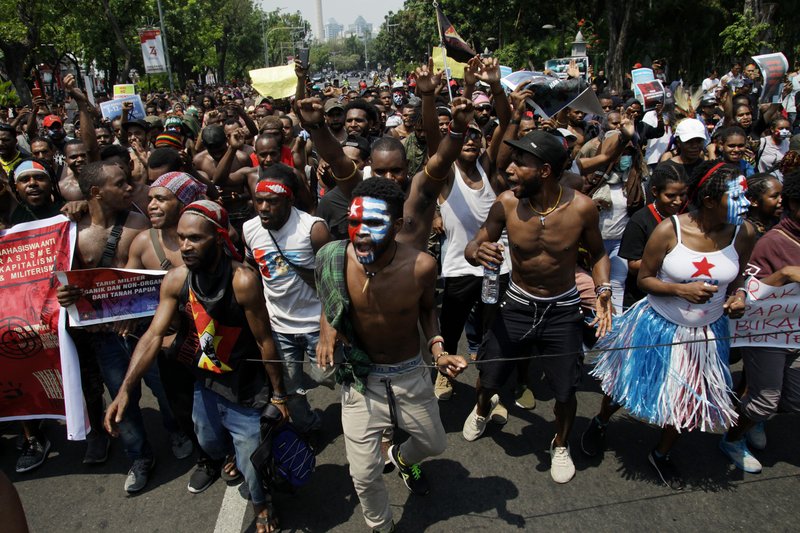
Pro-independence public demonstrations and protests happen on regular dates each year and have seen large numbers of West Papuans mobilise. In August 2019, a rapid series of protests, the biggest and most widespread for years in West Papua, were sparked by racist harassment of Papuan students in Javanese Surabaya.name="_ednref39"> One month of protests triggered major unrest in which dozens of deaths occurred.name="_ednref40"> Meanwhile, in a significant move, Indonesia accompanied its swift military response to the uprisings with widespread blocks on the internet.name="_ednref41">
The rising profile of the West Papua issue internationally
Allegations of human rights violations by Indonesian security forces in West Papua trace back to the early stages of transition from Dutch rule. The Suharto decades were marked by human rights abuses, ranging from clampdowns on basic freedoms to violent acts of suppression by security forces against those considered opponents of the state. Regular reports of brutal persecution by the Indonesian military of West Papuan villagers, who had been linked, accurately or not, to the Free Papua Movement (OPM), surged through the 1970s and into the early 1980s. Military crackdowns, including documented cases of torture, rape and summary killings, as well as the strafing of villages in certain Highlands regions, triggered an exodus of more than 10 000 refugees into Papua New Guinea in 1984.
Post-Suharto governments, including the Jokowi administration, have promised to address human rights violations, but have yet to make much progress. According to civil society and churches, abuses are persistent and serious.
In February 2019 the World Council of Churches (WCC) was permitted to send a multi-national delegation to West Papua where it visited several main centres. While commending Indonesia for allowing the visit, the delegation noted that indigenous Papuans appeared to be systematically marginalised, and alienated from their land and resources. Those on the team who had visited West Papua previously with a 1999 WCC delegation, expressed the view that discrimination and rights violations were as severe in 2019 as they were twenty years ago.
Perhaps the most persistent allegation of rights abuses in West Papua is the suppression of rights to freedom of speech and assembly. According to the International Coalition for Papua there were over 5000 political arrests across West Papua in 2016 and in Jayapura far more people were arrested than the police infrastructure in the city could process. Police responses to protests have continued to be heavy-handed, as evidenced by their handling of the August 2019 West Papuan student protests in Surabaya.
A group of UN special rapporteurs recently wrote to the Indonesian Government regarding reports they collated on the deaths of six West Papuans between 2017 and late 2018 as a result of alleged unlawful arrests, documenting worrying reports of “excessive use of force” and violence by security forces including harassment, arbitrary arrests and detentions by Indonesian security forces in West Papua and Papua Provinces. The group expressed serious concerns about an apparent culture of impunity and lack of investigations into allegations of violations in West Papua as a whole. In response, Indonesia’s representative to the United Nations, Hasan Kleib, described the rapporteurs’ joint communication as “inappropriately and unevenly crafted”, given they did not mention the massacre of Indonesian road construction workers in Nduga. While the massacre did not fall under the scope of the rapporteurs’ particular submission, Kleib’s citing of it was a useful reminder that human rights violations add fuel to the conflict between West Papuan fighters and Indonesia’s military and vice versa. The rapporteurs linked the six cases to a broader pattern of killings of indigenous Papuans by the security forces.
The WCC delegation’s findings echo other evidence suggesting “a more or less continuing human rights crisis in the region.” An Amnesty International 2018 report recorded 95 suspected unlawful killings by Indonesian security forces in West Papua in the previous eight years. These killings mainly occurred “in the context of unnecessary or excessive use of force during mass protests, during law enforcement operations or due to individual misconduct” by individual officials who operate with near-impunity. The suspected killings were at political events such as pro-independence marches or West Papuan Morning Star Flag-raising events. In some cases soldiers fired on unarmed groups.
Further reports of abuses have surfaced, even from remote regions of West Papua, with the opening up of digital communications. Visual documentation of abuses has had a powerful impact internationally. Recently, videos have emerged of incidents of police brutality, prompting UN rapporteurs to call for impartial investigations into “a widespread pattern of violence, alleged arbitrary arrests and detention as well as methods amounting to torture used by the Indonesian police and military in Papua.” The UN High Commissioner for Human Rights Michelle Bachelet Jeria, like her predecessor in the role, has been seeking agreement from Indonesia to send a team from her office to West Papua. That access has been difficult to secure.
Students demonstrating in Jakarta, August 2019 in response to allegations of mistreatment and racism towardsstudents in West Papua. Photo courtesy of Getty.
Melanesian solidarity
Images and reports of brutality and torture inflicted on indigenous Papuans have prompted deep concern in the Pacific Islands region, particularly among Melanesian states. Indigenous Papuans are considered to be ethnically Melanesian and share many cultural and social links with Melanesian peoples with bonds stretching across national borders. Indigenous Melanesian peoples have long had strong bonds transcending national borders. Reclaiming ‘Melanesian-ness’, and decolonisation of all Pacific nations, have been important goals for Melanesians since the 1970s, a decade when most countries of the region became independent. Indigenous intellectuals talk of “reclaimed Melanesian-ness as an anticolonial and panethnic identity”, based largely on the principles of the Melanesian Way, wantokism (bonds based on shared language, tribal, village and community affiliations) and kastom (customary culture). Vanuatu is an example. After gaining independence in 1980, its founding father and first prime minister, Walter Lini, declared that “Vanuatu will not be fully free until all Melanesians are free.”
This sentiment was a factor in the establishment the Melanesian Spearhead Group (MSG) — a subregional grouping founded in 1986 by the leaders of Papua New Guinea, Solomon Islands, Vanuatu, Fiji and the FLNKS (the Kanak and Socialist National Liberation Front), the representative group for the indigenous Kanaks of French-administered New Caledonia. From the outset, the group’s focus was on supporting sovereignty. Lini’s political party, Vanua’aku Pati, lobbied for regional support for the Kanaks’ struggle, and island countries rallied strongly to the cause. Lini was even willing to let FLNKS form a government in exile.
Decolonisation of West Papua was a similar cause for Vanuatu, which has given refuge to various West Papuan pro-independence figures fleeing Indonesian rule, including those who brought the West Papua issue to international attention.
Pacific Island governments have been discussing the West Papua issue internationally for many years — at the region’s pre-eminent political grouping the Pacific Islands Forum (PIF), at the MSG, and occasionally at UN level. Many Pacific Islanders see West Papuans as part of their regional community. Despite restrictions on access to West Papua, connections between Pacific Island communities have been reinforced by the rise of social media, which has allowed information about the grievances of West Papuans to cross borders. Those connections are reflected in civil society networks. For instance, being part of the NGO network and Pacific Islands Association of Non-governmental Organisations (PIANGO), has helped the Papua Customary Council (Dewan Adat Papua) take its advocacy for indigenous rights in West Papua to an international audience. Likewise, regional connections strengthened by visits to West Papua by a small number of members of the Pacific Conference of Churches have resulted in increased international advocacy for West Papuan human rights.
West Papuans will persist with the independence agenda
The TPNPB’s December 2018 massacre of Indonesian road workers in Nduga was not an isolated incident. The TPNPB militia (or its antecedents) had launched sporadic attacks on various Indonesian state interests over a period of decades. Characterised by Indonesia as an armed criminal group, TPNPB renewed its declaration of war on Indonesia at the start of 2018, and made a series of attacks throughout the year. It described the Nduga massacre as an act of self defence against a military illegally occupying West Papua, on the basis that Trans-Papua Highway workers included TNI engineer corps and were thus legitimate targets. While the massacre drew wide international media coverage, Indonesia’s government resolved to proceed with the road project, reinforcing military protection.
The TPNPB is a guerilla force, with fractured units of fighters spread across West Papua, including in remote districts. Although a far smaller force than the TNI, it has the advantage of familiarity with West Papua’s remote jungle and bush terrain which provides cover for both sporadic attacks and tactical retreats. It has been tenacious, as has the OPM’s quest for independence.
The Nduga massacre temporarily overshadowed the peaceful campaigns of the West Papuan independence movement. However, the United Liberation Movement for West Papua (ULMWP) has made significant progress internationalising the West Papuan cause. Where the broader OPM movement attracted criticism for being too fractured, the ULMWP presents a more united front, absorbing the main pro-independence organisations including the West Papua National Committee (KNPB). Among its gains was the historic inclusion in 2015 of the ULMWP as an official MSG observer, and it has made a bid for full membership.
The ULMWP’s high profile leader, Benny Wenda, fled West Papua in the early 2000s. His charismatic activism has earned him an international following, including on social media, but condemnation from Indonesia. On being awarded the freedom of the city of Oxford, United Kingdom, where he has been based since 2013, Indonesia criticised him for having ties to armed criminal groups. In January 2019 Wenda delivered a petition to the UN Human Rights Commissioner, purportedly containing 1.8 million signatures of West Papuans (70 per cent of the population) calling for an independence referendum.
Another West Papuan thorn in Jakarta’s side is the West Papua National Committee (KNPB), a peaceful movement with a large following of young people, pushing persistently for an independence referendum. The KNPB and ULMWP have support from international West Papua solidarity networks, including the International Parliamentarians for West Papua (IPWP), the International Lawyers for West Papua (ILWP), and the Pacific Coalition on West Papua (PCWP). This support has drawn global attention and has emboldened an independence cause which had received only sporadic international attention in the past.
Regional interests
Papua New Guinea and its next-door neighbour
The 1986 Treaty of Mutual Respect, Friendship and Cooperation between neighbours Papua New Guinea and Indonesia firmly establishes Indonesian sovereignty over West Papua, and decrees reciprocal respect for territorial integrity. However, political conflict in West Papua has had a significant impact on Papua New Guinea.
For many years, the porous border between the two nations has experienced two-way traffic. The 1986 agreement between Indonesia and Papua New Guinea alleviated Jakarta’s irritation at the use of PNG territory by OPM operatives seeking shelter on the PNG side of the border. However, the border has been exploited for trafficking drugs, guns, contraband and illegal labour. While indigenous communities on both sides have traditional crossing rights, thousands of West Papuans have melted into Papua New Guinea seeking refuge from the excesses of the Indonesian military. Papua New Guinea is ill-equipped to provide for refugees, but is reluctant to return West Papuans to Indonesian rule.
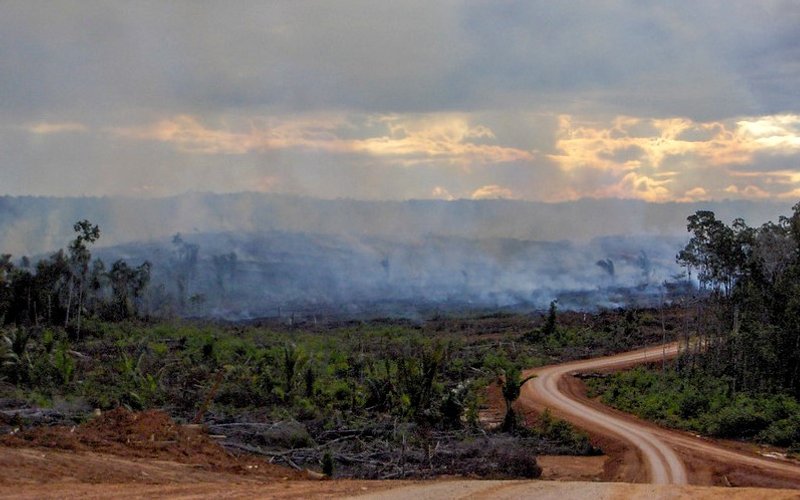
There are other irritants across the shared border. Carbon haze from rampant deforestation drifts over the border from the Indonesian side. In addition, the influx of migrants from other parts of Indonesia to participate in logging and oil palm developments in the West Papuan regions near the international border, along with armed conflict, is a driving factor behind displacement of indigenous landowner communities.
Deforestation and open burning in Korindo plantation, Papua, June 2016. Photo courtesy of MightyEarth/Flickr.
Papua New Guinea's political leaders often cite the proximity to Indonesia as a massive opportunity for economic development. But the money is mostly going one way, to Indonesia. People from PNG border provinces such as West Sepik are increasingly lured to the other side for goods and services. Fear of being subsumed by its big neighbour runs deep in Papua New Guinea’s national consciousness and distrust of Indonesia based on West Papua’s history only exacerbates this fear.
During the tenure of former Prime Minister Peter O’Neill between 2011 and mid-2019, PNG foreign policy underwent subtle shifts. Papua New Guinea’s hosting of the 2018 Asia−Pacific Economic Cooperation (APEC) leaders’ summit was part of a push for greater international standing, with O’Neill projecting Papua New Guinea as a regional leader advancing Pacific Islands issues such as climate change and other shared concerns. In a departure from past government practice, O’Neill spoke publicly about the plight of West Papuans:
Pictures of brutality of our people appear daily on the social media … We have the moral obligation to speak for those who are not allowed to talk … Papua New Guinea is a regional leader. We must take the lead in having mature discussions with our friends in a more solid and engaging manner. normal;">
While supporting Indonesian sovereignty over West Papua, O’Neill recognised the domestic political risk in failing to address persistent rights problems in West Papua. However, Papua New Guinea’s foreign minister under O’Neill, Rimbink Pato, followed those remarks with swift reassurances to Jakarta of Papua New Guinea’s respect for Indonesian control over West Papua. Pato had formed close relationships with his Indonesian counterparts, and proved effective at containing the West Papua issue in regional fora, the PIF and the MSG, whenever pressure could have been applied on Indonesia. With Pato no longer in the mix (replaced as foreign minister in the recent leadership change), the forum, led by Vanuatu, adopted a stronger position about human rights abuses in West Papua at its August 2019 summit.
It is not yet clear whether Papua New Guinea’s new Prime Minister James Marape will change longstanding government policy, but the evidence to date suggests he is unlikely to pursue West Papuan self-determination. His statements in the aftermath of the violent protests in late 2019 reiterated Indonesia’s sovereignty even while pledging to accept refugees fleeing the violence.
Although successive PNG governments have avoided confronting the West Papuan self-determination issue, a small number of local MPs openly support West Papuan independence. Port Moresby Governor Powes Parkop and Oro Governor Gary Juffa are among the most highly visible political figures in Melanesia, both having gained traction on the issue in traditional and social media. In January 2019, Parkop and Juffa joined representatives from the PNG West Papua Association, OPM and TPNPB in a rare public forum in Port Moresby, at which they announced their intention to push for a PNG policy change on West Papua, supporting an independence referendum. This will be a steep challenge given Indonesia’s influence on PNG politics.
In a surge of engagement between West Papuans and Papua New Guinea, Papua Province’s Governor Lukas Enembe visited several northern PNG provinces in late 2018. He was also hosted in Papua New Guinea’s capital by Parkop, where they planned exchange programs between the sister cities of Jayapura and Port Moresby. Parkop said it was time to start developing a relationship “not based on fear”. Enembe lamented that it had taken more than four decades for West Papua and Papua New Guinea to have formal contact.
Papua New Guinea, like Indonesia, has its own concerns about territorial integrity. These are at a raised state currently after the historic independence referendum in Papua New Guinea’s autonomous region of Bougainville in 2019. The result was 97.7 per cent of Bougainvilleans voting for independence, although it is a non-binding vote requiring ratification by the national parliament to come into effect. Such an overwhelming majority vote is difficult to ignore, but PNG leaders are reluctant to set a precedent for other parts of the nation to attempt to break away.
Melanesian relations with Indonesia
Pacific governments have an uneasy task balancing their relationship with Indonesia against their desire to support human rights, peace and stability in West Papua. At the UN General Assembly in 2016, seven Pacific countries pressed the international community to act on West Papua, citing either rights abuses, self-determination aspirations or both. Solomon Islands’ Prime Minister Manasseh Sogavare noted the symbiotic link between the two:
Human rights violations in West Papua and the pursuit for self-determination of West Papua are two sides of the same coin. Many reports on human rights violations in West Papua emphasise the inherent corroboration between the right to self-determination that results in direct violations of human rights by Indonesia in its attempts to smother any form of opposition. normal;">
Indonesia responded with stern criticism of these countries, including of their own human rights records. Jakarta opposes any argument for self-determination on the basis of Indonesian sovereignty. The West Papuan argument challenges the legitimacy of that sovereignty, but the human rights violations give oxygen to the self-determination debate. The issue is now being raised frequently by Pacific countries at UN Human Rights Council sessions in Geneva, placing further pressure on Jakarta.
With the West Papua issue growing in international profile, Indonesia has put more emphasis on relations with Pacific Island countries. This presents opportunities for countries such as Fiji. After the 2006 military coup and consequent Australian and New Zealand sanctions, coup leader Frank Bainimarama turned to new allies in the region such as Indonesia. Bainimarama leveraged the West Papua issue to tap into Indonesian assistance, pledging Fiji’s support for Indonesian sovereignty in the territory. In turn Indonesia offered Fiji stronger bilateral ties, assistance packages, a police academy and boosting of security co-operation.
However, by aligning with Indonesia, regional governments risk appearing weak on an issue that resonates with their grassroots support. Former Solomon Islands Prime Minister Gordon Darcy Lilo earned the ire of Solomons’ media and civil society after he was persuaded, with various Indonesian inducements, to publicly acknowledge Indonesia’s irrefutable sovereignty over West Papua. Jakarta’s hosting of a Solomons delegation to West Papua without first consulting civil society organisations provoked similar reactions.
The politically charged issue has even been a factor in leadership changes in both Solomon Islands and Vanuatu. A parliamentary motion of no-confidence removed Sogavare as Solomons’ prime minister in late 2017, citing concerns about his trenchant policy towards West Papua. Back in power in April 2019, Sogavare has notably quietened on West Papua. Vanuatu’s staunch support for West Papuan independence aspirations has been disrupted at various points in recent years by its former Prime Minister Sato Kilman. Suspicion over Kilman’s ties to Indonesia was a key factor in his removal as prime minister in 2013. Within two years, Kilman visited Jakarta as foreign minister shortly before he plotted successfully to replace pro-West Papuan Joe Natuman as prime minister. Kilman’s dabbling in Vanuatu’s West Papua policy was soon overshadowed by a bribery scandal implicating half of his government, 14 of whom were jailed before his rule collapsed.
The rise of China and its increasing influence in the Pacific has exercised leaders in the region, particularly Australia. But the ULMWP has warned that it is Indonesia, not China, which causes greater concern for Melanesian countries that worry about Jakarta’s pervasive influence in their domestic political scenes. Indonesia’s outreach in the Pacific is aimed more broadly than the West Papuan issue. It has its own regional leadership aspirations. Susilo Bambang Yudhoyono was the first Indonesian president to visit a Pacific Islands country when he visited Fiji in 2014, and he offered a US$20 million package for addressing climate change and natural disasters in the Pacific. When Samoa hosted the 2017 PIF summit, Indonesia used its South-South Cooperation framework to commit to a range of assistance.
Indonesia’s Pacific outreach has reaped it some gains on the West Papua issue. Of the seven Pacific countries who raised it at the United Nations in 2016, a number have since modified their stand. The leaders of Nauru and Tuvalu have made statements regarding West Papua which underline not only their support for Indonesian territorial sovereignty but enthusiastically endorse Indonesia’s development of the so-called “backwards” provinces of West Papua. Nauru’s statement came after a rare visit by senior Indonesian minister Wiranto who has advocated a soft diplomacy approach on West Papua in the Pacific. Indonesia’s Pacific Expo event in Auckland in July 2019 showed it has the whole islands region in its sights.
While it will be encouraged by this momentum, Jakarta will also have paid close attention to Bougainville’s vote for independence in the late 2019 referendum, and will be assessing the precedent this might pose for West Papua in the Melanesian sphere.
The MSG and the West Papua issue
West Papuan and Indonesian voices in the MSG
Sporadic campaigns to include West Papuans in the MSG made little headway for twenty years, with Papua New Guinea actively opposing it on the basis that West Papuans, unlike the Kanaks, had no formal process for independence. Things began to shift in 2008 after the MSG opened a secretariat in new Chinese-built headquarters in Port Vila. Vanuatu and the FLNKS were determined to see West Papuans join the group. At the same time, a group of mostly exiled West Papuans — including Vila-based independence activists Andy Ayamiseba and former OPM figure John Ondawame — established the West Papua National Coalition for Liberation (WPNCL), which had strong links in the Pacific Islands.
Jakarta had intermittently suggested Indonesia join the MSG, and started pushing harder on the basis of an argument that Indonesia was home to most of the world’s Melanesian population (11 million) — more than the combined population of MSG member states. This was an unusual argument for Indonesia to make, promoting a sub-national cultural identity. While some Melanesian leaders were indifferent to the claim, others, notably Fiji’s government, began citing it in proximity to the membership issue. Indonesia’s MSG opportunity arose in 2011, after the breaking of a year-long deadlock over the accession of Fiji’s Bainimarama to the MSG chair due to democracy and governance provisions in the MSG constitution. Resolution of the chairmanship stand-off coincided with Sato Kilman’s return to power in Vanuatu. With both Bainimarama and Kilman on board, Indonesia was granted observer status in the group in 2011. The move has been controversial in Melanesia. One only has to glance at social media discussions on the topic to see how at the grassroots level Indonesia’s inclusion in the MSG was considered a betrayal of the Melanesian spirit. Some member governments in the MSG have made it clear they are also unhappy about it.
Undeterred by Indonesia getting in first, the WPNCL took its membership bid to MSG leaders at their 2013 summit in Noumea. However, the leaders deferred a decision, pending more consultation over West Papua. Via Fiji’s Foreign Minister, Ratu Inoke Kubuabola, Jakarta offered a vague invitation for an MSG delegation to visit Indonesia, including West Papua. After a six month delay, Jakarta organised a visit, but with no provision for delegates to meet any representatives from civil society and West Papuan representatives as mandated by the MSG. Vanuatu’s government claimed the mission had been ’hijacked‘ by Indonesia, and withdrew from the delegation. In the end, the trip proceeded with MSG delegates tightly ushered by security officials, spending just a few hours in Jayapura meeting government officials and police. During the visit, 47 West Papuan demonstrators were arrested.
At the next MSG summit, leaders again deferred the WPNCL membership application and in their final communiqué agreed instead “to invite all groups to form an inclusive and united umbrella group in consultation with Indonesia to work on submitting a fresh application.” West Papuan diplomatic efforts hit full swing. Within half a year, with Vanuatu’s help, the WPNCL joined with other independence organisations to create the ULMWP. A grassroots petition in West Papua for MSG membership was signed by 55,000 people. In 2015, the ULMWP finally achieved MSG observer status under the chairmanship of Solomon Islands.
MSG comes to an impasse over West Papuan membership; Indonesia restricts West Papuans’ right to protest
For West Papuans, observer status was a victory dampened by the MSG’s simultaneous move to grant Indonesia associate member status. This was billed as a practical way to bring Indonesia and West Papuans together at the table. But so far there has been minimal dialogue, due to chronic, mutual mistrust.
The ULMWP, and some member states, have protested at efforts by Indonesian officials to dictate terms on the wording of discussions on MSG membership guidelines, a matter on which the group has become bogged down. Meanwhile, Indonesian officials accuse ULMWP of disruptive practices in MSG processes, at the same time as Indonesia conducts a well co-ordinated security crackdown in West Papua on activities in support of ULMWP. Thousands of West Papuans were arrested over several months for participating in demonstrations. While Jakarta tends to see crackdowns as the only way to respond to such mobilisations, their consequence is to further fuel independence sentiment among West Papuans.
With Indonesia trying to tamp down tensions, and deflecting regional calls for access to West Papua, divisions between MSG members have widened. Vanuatu and the FLNKS on one hand are pushing a West Papua agenda; Papua New Guinea and Fiji on the other hand support Jakarta. The Solomons sits somewhere in the middle. Melanesian Spearhead Group leaders’ meetings have become irregular, and matters of West Papuan and Indonesian participation in MSG have led to a festering dynamic in the group. The ULMWP has pushed on determinedly, formally submitting its application for full membership in the MSG in June 2019.
Where to next for the West Papua issue?
Policy challenges for Indonesia in West Papua
The infrastructure and development drive accelerated by President Jokowi has gained momentum in West Papua. After his 2019 re-election, he will look to continue this push. Indonesia will also maintain its enhanced security presence. Ongoing TPNPB threats to the infrastructure effort will only provoke Indonesia to further boost its security presence in West Papua, reducing the chances of a peaceful resolution. As Indonesia’s population continues to grow, the need for space and resources will drive migration to West Papua. According to a West Papuan government insider, the occasional Pacific delegations which have visited in recent years have been “stunned” by the rapid pace of development in West Papua. Yet as evidenced by the TPNPB’s defence of the Nduga attack, the widespread perception among West Papuans is that infrastructure projects such as the Trans-Papua Highway are mainly for the benefit of non-West Papuans, the police and the military.
Deforestation remains a pressing issue. West Papua is one of the world’s deforestation hotspots, and Jakarta has so far made only token efforts to address it. A moratorium on the granting of logging and oil palm concessions has stalled. Another brewing challenge in West Papua is the prospect of religious disharmony. For decades Christians and Muslims have coexisted peacefully in predominantly Christian West Papua. But with migration steadily transforming the demographics, and the rise of conservative Islam across Indonesia, there may be more instances of inter-religious conflict like 2015’s mosque-burning in the Highlands town of Tolikara. Finally, Indonesia’s management of the emerging COVID-19 crisis in the region will be a critical challenge to its claims for effective governance of West Papua.
Such social and environmental pressures stoke the cycle of conflict in West Papua. Unless the cycle can be broken, West Papuans’ sense of disenfranchisement will grow, the TPNPB will continue to agitate, Indonesia will clamp down harder on security, and divisions in the MSG will harden.
Indonesian foreign policy in the region
Indonesia’s diplomatic outreach in the Pacific is likely to continue. In a recent opinion editorial, Indonesia’s Foreign Minister Retno Marsudi heralded a new era of connectivity between Indonesia and the Pacific Islands, arguing they “belong to one family”. According to Marsudi, Indonesia and Pacific Island countries face common challenges ranging from climate change to economic development. But Pacific Islands are unlikely to be convinced about Marsudi’s “family” claims until the West Papuan issue is resolved.
Indonesia claims it is ready to confront abuses in West Papua, but does not outwardly concede a link between the issue of human rights and West Papuan self-determination aspirations. Its sensitivity to foreign questions about West Papua runs the risk of impeding the development of healthy relations between itself and other countries in the region.
The West Papua region is also of strategic importance to Indonesia, with regional security a mounting priority. Marsudi explained in March 2019 that “as Indonesia’s Global Maritime Fulcrum initiative takes shape, we have expanded and upgraded strategic ports in the eastern part of the country. Our aim is to establish greater sea connectivity, which will bring Indonesia closer to the South Pacific.”
Indonesia was irked by the failure of Australia and the United States to consult it on their plans for a naval base on Papua New Guinea’s Manus Island, much as it was with the announcement about US troops stationing in Darwin Jakarta has leverage in Canberra and Washington because both those countries’ Indo-Pacific strategies need Indonesian involvement in the alliance if they are to counter Chinese dominance. Jakarta has a complex relationship with Beijing, but is less concerned than Washington and Canberra about Chinese dominance. Indonesia’s Global Maritime Fulcrum initiative involves shoring up its own alliances in the region as a kind of fortification of its own patch. Ports in West Papua and Papua New Guinea have become more important strategically to Jakarta as it looks to strengthen its security and infrastructure ties with Papua New Guinea. To build such connections, Indonesia cannot realistically keep West Papua closed off to outside access as it has done for decades. A blurring of the border line with Papua New Guinea means an opening up of West Papua and potential concessions on access to the troubled territory for Papua New Guinea and, by extension, the Pacific Islands community.
How will Pacific nations address the West Papua issue?
Under the new Marape government in Papua New Guinea, the focus on Southeast Asia for trade and commercial opportunities will intensify. Marape has indicated he will “look at Indonesia in a bigger way”, which may accelerate the opening up of links across the border. Road projects are springing up on either side, and Papua New Guinea’s northern provinces are pushing for increased connection to Jayapura not just by road but by electricity and commerce. Marape’s government has little appetite to advance West Papuan self-determination matters while it grapples with Bougainville’s bid for independence. But the human rights problem in West Papua is an issue on which Papua New Guinea is willing to press Indonesia.
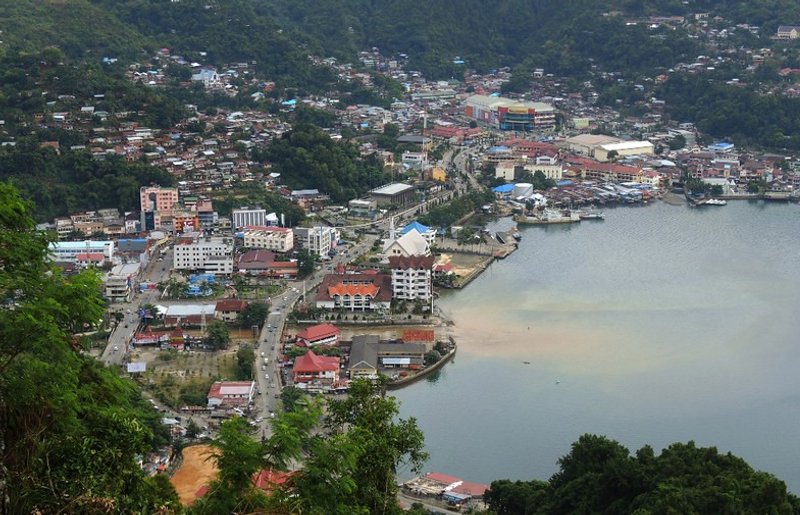
Jayapura, West Papua. Photo courtesy of Axel Drainville/Flickr.
In endeavours to thicken cross-border development and trade, Papua New Guinea has the broad support of Melanesian countries. Papua New Guinea’s government seeks to be the leader of the Pacific Islands region and as such it is incumbent on Papua New Guinea to advance the concerns of its fellow island countries. As the ULMWP and various lobby groups maintain their work in the region, island countries — not just Melanesian countries but other Pacific nations such as Tonga, Tuvalu and Nauru — will keep pushing for access to West Papua for the UN Human Rights Commissioner (OHCHR), consistent with the PIF’s stance on the issue of human rights.
Vanuatu, which has a new Vanua’aku Pati-led coalition government in place as of April 2020, will continue to persevere with its international advocacy for West Papuan rights, although it is understandably preoccupied in the short-term by the recent devastation caused in the country by Cyclone Harold, and the disruption of the COVID-19 pandemic. However it intends to submit a UN General Assembly resolution calling for West Papua to be inscribed on the UN decolonisation list, triggering UN oversight of the human rights of West Papuans. The ULMWP will continue to lobby for these UN efforts.
While Indonesia’s growing ties with some Pacific Island countries have eroded support for Vanuatu’s efforts, several countries remain vocal, including Tonga which has also urged the UN decolonisation listing. At the latest PIF summit, leaders agreed to press Indonesia to allow the UN Human Rights Commissioner’s office access to West Papua in time for their next summit in 2020. This new regional cohesion on the matter suggests a less splintered membership in PIF than MSG. Ultimately, the forum, with Australia and New Zealand’s weight involved, represents a sizeable bloc of nations.
There are also other international networks within which to pursue the West Papuan cause. Vanuatu and others have been discussing West Papua within the African, Caribbean and Pacific Group of States (ACP); and broad coalitions of small island states represent other avenues for potential influence in the UN sphere.
Civil society is likely to continue international lobbying on West Papua, energised by West Papua solidarity at a grassroots level across the Pacific. The Pacific Coalition on West Papua and the Pacific Conference of Churches are increasingly engaged on the issue. Whether their lobbying will be influential depends on how effectively they work with Melanesian leadership in the next few years.
Will the MSG disintegrate over the West Papua issue?
Divisions in the MSG over the West Papua issue, and problems with clarifying its membership criteria, are weakening the organisation. Vanuatu’s former Foreign Minister Ralph Regenvanu has openly questioned its relevance:
[The] consensus approach to decision making is failing in the MSG. Vanuatu’s been consistently saying that it’s not happy with the way that decisions are made, that they’re not made in this consensus manner. And that’s continuing. normal">
The West Papua issue is unlikely to fade completely from the group’s agenda, however. Decolonisation is a founding aim of the MSG, and the 2019 Bougainville referendum result combined with the close result in New Caledonia’s 2018 referendum, ensure issues of self-determination will continue to feature among the group’s concerns.
Along with waning commitment among its cash-strapped member governments to financing the MSG secretariat, divisions over West Papua still have the potential to undermine the future purpose of this group and Melanesian regional solidarity. But fresh leadership can make a difference, and when Vanuatu resumes the MSG chairmanship in 2020, the West Papua issue will likely be tackled with renewed vigour.
The position of Australia and New Zealand
For the Australian government, West Papua has been a vexed issue. As Rodd McGibbon pointed out in his 2006 paper Pitfalls of Papua, “the basic orientation of Australian governments since the early 1960s [has been to] recognis[e] the importance of Indonesia to Australia’s long-term security interests.” After the East Timor crisis and referendum placed unprecedented strains on the bilateral relationship, the Australian government attempted to reassure Indonesia that it respects its territorial integrity. But in the absence of a well-articulated policy on West Papua, the issue remained a potential irritant. Indonesia’s mistrust hardened when Australia controversially granted 43 West Papuans asylum in 2006 based on what officials reportedly confirmed as a ”well-founded fear of being persecuted” if they returned to their homeland. Indonesia reacted by recalling its ambassador and threatening to review its cooperation with Australia on issues such as people-smuggling and terrorism. Australia’s push to recalibrate relations resulted in the 2006 Lombok Treaty which affirmed “mutual respect and support for the sovereignty, territorial integrity, national unity and political independence of each other, and also non-interference in the internal affairs of one another.”
The spectre of China’s involvement in the region may drive Australia to further solidify relations with Jakarta and support its stance on West Papua. But the security of Papua New Guinea is something Australia cannot afford to neglect, nor its relations with Melanesians. The recent ‘Pacific Step-up’ is an acknowledgment that Pacific governments now have more options for development partners, and Canberra cannot take their support for granted. A few years ago it may have seemed fanciful to think Pacific nations could pressure Canberra to make more effort on West Papua. But the Morrison-led government has recently lost some credibility in the region over its climate change policy. It now needs to show more responsiveness on the big issues facing the Pacific Islands if it wants to continue counting these nations as “family”. Morrison’s recent pledge of aid to the Pacific in response to the COVID-19 crisis is further evidence of the region’s importance to the government.
New Zealand also cannot afford to keep fobbing off Pacific Islands’ concerns about West Papua. Consistent with its Pacific Reset, New Zealand’s government has pledged to be more of an equal partner to the island countries in confronting their most pressing challenges, and this is not restricted to climate change. A Labour-led government is comfortable with advancing the West Papua human rights issue as part of the PIF collective, while encouraging regional engagement with Jakarta. Indeed, this is where Canberra could also push the issue. In New Zealand, should Prime Minister Ardern lose the September 2020 election to the National Party, the new government may not be as interested in talking to Jakarta about West Papua. However, both sides of the political divide in New Zealand are attuned to the great value of the country’s efforts in conflict resolution in Bougainville, leaving open the possibility that it could again play a role to forge peace in other parts of Melanesia. This was underlined in the recent Bougainville referendum when New Zealand provided key operational and security support.
Recommendations
A. Dialogue
Indonesia envisages itself as a regional leader, but to achieve this it must first win the trust of Pacific nations. It can do this by commencing a genuine dialogue about the core problems in West Papua.
The international community (governments and civil society) has a role to play in mediating dialogue between Jakarta and West Papuans on issues of self-determination and human rights abuses. The mediator need not be a Melanesian country, but the MSG is a logical organisation for promoting dialogue. Papua New Guinea, Fiji, Australia, New Zealand and other Pacific countries will not endanger their respective stances on West Papua’s political status merely by facilitating dialogue.
B. Truth and reconciliation
A first step to addressing the deep mistrust between West Papuans and the Indonesian state would be to facilitate a thorough public record of human rights abuses in West Papua through the establishment of a truth and reconciliation commission. There was provision for this in the Special Autonomy Law of 2001, but Indonesia showed negligible interest in it, and it has never been implemented. However, the expiry of the Special Autonomy Law in 2021 and the apparent need to negotiate a successor framework for it, provide a useful opportunity to establish a commission. There are also recent indications that Indonesia may institute its own Truth and Reconciliation Commission. This is where the PIF, or particularly the MSG, could play its most constructive role in helping resolve the West Papua problem. Reconciliation processes are deeply entrenched in Melanesian societies. The Commission should have an emphasis on Melanesian reconciliation custom, and could include as consultants Melanesian custom chiefs from all the MSG territories. This would help generate buy-in for the commission among the indigenous people of West Papua. A truth and reconciliation commission would be a catalyst for defusing West Papua’s ongoing pattern of conflict, and open the way towards long-term solutions.
C. Pacific links
West Papuans share strong cultural bonds with Pacific Islanders. Seeing themselves as distinct from other peoples in Indonesia, they seek the freedom to be able to connect to other Pacific peoples, especially fellow Melanesians. Melanesian communities in turn want to build links across the region’s borders, and for West Papuans to be part of that. Opportunities should be sought in culture, trade, sport and other interactions. Melanesian Spearhead Group countries have taken promising steps to include West Papuans in Melanesian arts and cultural festivals. More can be done. For instance, Melanesian nations are big followers of football and would benefit from seeing the former Indonesian champions Persipura Jayapura play on their soil. A range of trade opportunities within the region would open up if Melanesian countries could build commercial links with West Papua.
D. Border security
Papua New Guinea should work with partners, particularly Australia, to improve its own security capabilities in the porous border area. Papua New Guinea’s Defence Force and border agencies do what they can to stem the cross-border flow of guns, drugs, contraband and illegal labour, but are drastically under-resourced, and would struggle to cope with future threats. If the TPNPB’s conflict with Indonesia drags on in West Papua’s Central Highlands, the number of internally displaced villagers will rise. The threat of a large flow of refugees into Papua New Guinea, reminiscent of the great wave of 1984, is real.
Australia is a natural partner to help bolster Papua New Guinea’s border security capabilities. It should also be prepared to support Papua New Guinea in absorbing West Papuan refugees if numbers swell due to ongoing conflict.
E. Humanitarian aid
Melanesian and other regional governments should propose envoys to West Papua, and work for greater access in providing humanitarian assistance to West Papuans in crisis areas. The COVID-19 crisis may be the ideal opportunity to promote such access. The concept of envoys visiting West Papua over a period of time to gauge conditions, including human rights and development indicators, might be more palatable to Indonesia than a team that appears to be investigating it in one swoop. However, in keeping with signs of a more cohesive front on West Papua from the PIF, Melanesian countries should press Jakarta to allow access to international humanitarian assistance for West Papuans affected by armed conflict, natural disasters and disease outbreaks.
Conclusion
With growing regional and international support, West Papuans will continue to fight for self-determination. It remains to be seen the degree to which the COVID-19 pandemic will affect their cause. Regional countries will have less motivation to address the West Papua issue until the global health crisis has abated and their economies start to recover. However, if West Papua experiences widespread transmission of the virus and its already weak public health system is overwhelmed, West Papuan frustrations with Indonesian rule could deepen. It is clear from the attacks around Freeport in March and April 2020 that even in the face of the pandemic, violent conflict has intensified. But this does not detract from the mainly peaceful efforts of the wider independence movement which continues to urge Jakarta to enter into dialogue, with a third-party mediator, in order to end the conflict. West Papua remains an issue that will not go away.
About the author
Johnny Blades is a senior journalist with RNZ Pacific who has written and reported extensively about the Pacific Islands, including some of the most remote parts of the region. He has previously written for The Interpreter as well as The Guardian, Monocle,Pacific Journalism Review and other publications.