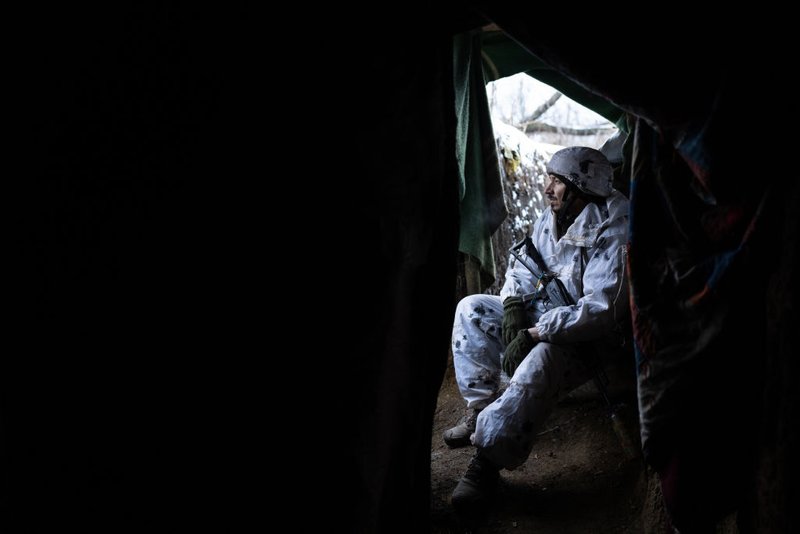
Finally, the Russian forces that are massing in the vicinity of Ukraine’s border appear insufficient to stage a full-scale invasion. According to the open source data, the Russians have a grouping of about 127,000 strong arrayed against a reported 125,000 Ukrainian troops in the country’s eastern regions. An invasion force would be expected to be at least three times current levels.
Troop movements are also being conflated. Russia’s Ministry of Defence has also undertaken preparations in recent days for a Russia-Belarus military exercise dubbed “Allied Resolve 2022”. Several army and artillery brigades, combat aircraft and air defence units are being transferred with great fanfare from Russia’s Eastern Military District to Belarus, the first theatre-to-theatre (east-to-west) force manoeuvre, of its kind.
But with all this said, what would be a key driver for Russia to resort to force now?
Russia’s demands ahead of the recent talks to deescalate the stand-off illustrate that the Russian leadership remains preoccupied with strategic geography, a notion the Kremlin has worried over since the end of the Second World War. The eastward expansion of NATO membership since 1998 has shifted the allies’ military infrastructure close to the Russian border, leaving Moscow to view Ukraine and Belarus as the last two major segments of what was once a strategic buffer zone with Europe.
In Ukraine, ideally the Kremlin wants a favourable change of regime, which appears unlikely. Realising that, Russia will probably accept a hostile Ukraine provided that remains free of any multilateral or bilateral defence commitments with either the whole of NATO or any of its individual members. And that hope appears to be beyond what either Washington or Brussels seems prepared to accept.
So Russia could potentially resort to force one of two ways:
- By defending an elusive buffer (parts of the Donetsk and Lugansk regions presently controlled by pro-Russia’s separatists;
- Or to launch targeted strikes driven by the attack-defeat-destroy-retreat operational principle, similar to what the Russian military executed during the 2008 Five Day War against Georgia.
The other trigger point could be the introduction of promised sanctions “from hell” against Russia. If applied as a pre-emptive measure, the Kremlin might decide to unleash hell of its own, having nothing more to lose in its already sank relations with the West.
But for the moment Putin will play his favourite game of ambiguity, postulating about strategic geography, all while holding a finger on a trigger. And he is probably thankful for the ongoing media commentary, which inevitably inflicts serious pain on Ukraine’s already struggling economy before any offensive has even been launched.
Alexey Muraviev