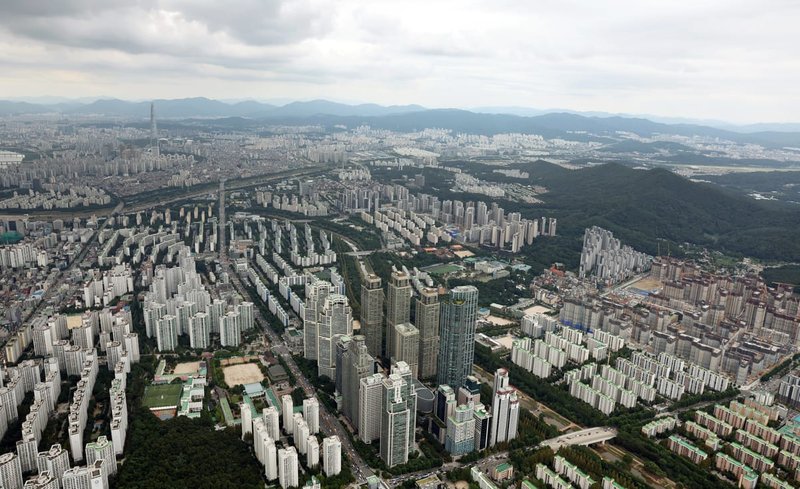
This transition had a lot to do with its export-oriented development strategy, which built on the principle of specialisation.
A wonderful symbol of this relationship is your tablet, smartphone or smartwatch. There’s a good chance the components inside it were manufactured for a South Korean-owned company using lithium and bauxite mined in Australia.
However, this trading relationship is also a reminder of what Australian economic policymakers can learn from our South Korean counterparts. The Economic Complexity Index, devised by Ricardo Hausmann and a team at the Harvard Kennedy School of Government, estimates the economic complexity of a country based on the diversity of exports a country produces and their ubiquity (meaning the number of other countries that can produce those exports).
Countries are ranked highly on the index if they export a diverse range of sophisticated goods, including products that few other countries can make. South Korea ranks 4th, nestled between Germany and Singapore. Australia ranks 91st, nestled between Kenya and Namibia.
This isn’t just a mining story. Even before the commodity price surge of the early-2000s, Australia ranked low on the economic complexity index. But Australia has slipped down the rankings in the past generation.
In this regard, Australia can learn from South Korea’s leadership in advanced manufacturing, including magnets, batteries and electric vehicles.
Australians are proud of our mining sector, but we recognise the need to develop a more diverse industrial base if we are to grow the economy, create new jobs, and remain resilient in the face of global shocks – including evolving from a simple dig-and-ship approach in the resources sector to grow downstream industries. A good example is the rare earths sector, moving further downstream to minerals processing and some specialty alloy and metals production.
All this benefits from openness. For many nations, trade liberalisation is conditional. To use the metaphor of the great economist Joan Robinson, countries typically only agree to take the rocks out of their harbours if their trading partners take the rocks out of their harbours. The ideal is no rocks. But fewer rocks are better.
Today, international trade and investment is critical to Australia’s economy. It creates jobs and prosperity. It opens up opportunities for Australian businesses to expand.
This is an edited extract of a speech Andrew Leigh, Assistant Minister for Competition, Charities and Treasury, delivered at Yonsei University, Seoul on 2 May. He is the author of the 2017 Lowy Institute Paper “Choosing Openness”.