Subscribe to The Informer for monthly expert analysis, and to Events for advance notice of visiting world leaders and distinguished guests.
You may unsubscribe from Lowy Institute newsletters at any time. For information on our privacy practices and how to unsubscribe, see our Privacy Policy.

Subscribe to
The most-pressing world events explained by Lowy Institute experts and global contributors, in your inbox, every Wednesday.
You may unsubscribe from The Interpreter at any time. For information on our privacy practices and how to unsubscribe, see our Privacy Policy.
Samarkand lies on the Silk Road, the ancient trade route linking China to the Mediterranean (AXP Photography/Unsplash)
The Fix: The Stans have it
Your weekly Interpreter feature about issues, resources or helpful distractions that might otherwise be missed.
Jack Sato is a Data Analyst for the Asia Power Index at the Lowy Institute.
We’re asking contributors to put together their own collected observations like this one – and as always, if you’ve got an idea to pitch for The Interpreter, drop a line via the contact details on the About page.
When you think of the Central Asian republics of Kazakhstan, Kyrgyzstan, Tajikistan, Turkmenistan and Uzbekistan, what’s the first thing that comes to mind? For some, it may be the Silk Road. For others, the (inaccurate) cultural stereotypes. Some might be surprised to learn they even exist. Yet few will think of the significant role these countries have played in global politics in their barely 30 years of independence. Their role is often overlooked, instead being viewed as “insignificant states”.
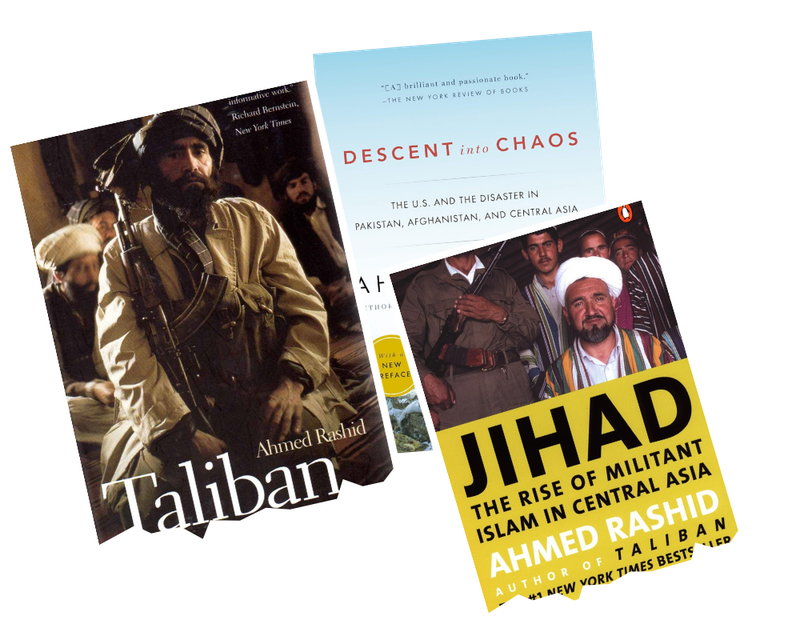
Collection of Amed Rashid books for The Fix
A great introduction to their role and dynamics is found in the books of Pakistani journalist Ahmed Rashid. Taliban: Militant Islam, Oil and Fundamentalism in Central Asia, covers the attempts by Turkmenistan to export gas through the Turkmenistan-Afghanistan-Pakistan-India pipeline (TAPI), avoiding Iran and Russia, and the resulting great power rivalry, which Rashid describes as the new Great Game. The book highlights Turkmenistan’s struggles in exporting its vast energy and mineral reserves.
A subsequent book, Jihad: The Rise of Militant Islam in Central Asia, describes the causes of the rapid rise of radicalism in the region – covering both the historical background and the situation in the 1990s. Rashid focuses on poorly drawn borders, a Soviet legacy, and a population whose religious suppression was only lifted in the 1990s.
In the aftermath of the Taliban takeover in Afghanistan, and an economically weakened Russia after the resurgence of the TAPI, understanding the Central Asian republics is as important as ever.