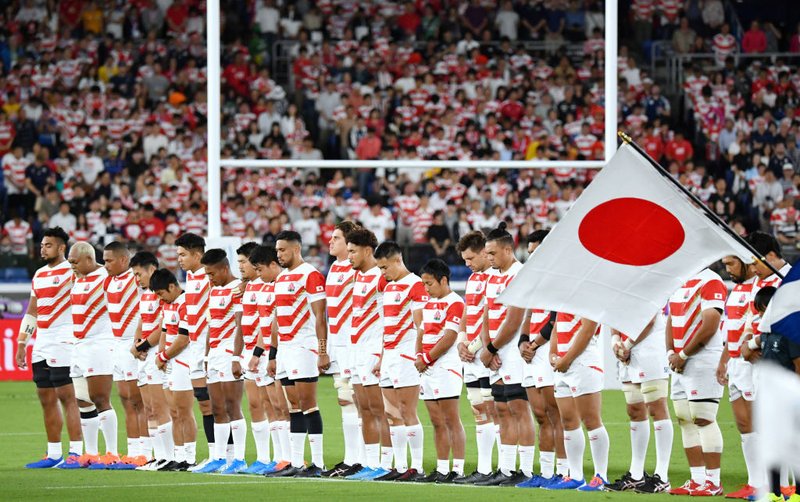
Apart from national pride and the excitement of supporting the home team, there are major incentives for Japan to host major events such as these. It is an opportunity to remind the international community that Japan has not faded; it remains a vibrant, highly advanced society with an alluring mix of traditional values, state-of-the-art technology, and “cool” pop culture. There are also economic benefits to the Japanese economy through an increase in the number of tourists visiting Japan (the government objective is to increase tourism from 1 million to 2 million people per year) and the promotion of Japanese goods to an international market. This is particularly important given stalled efforts to stimulate the economy through “Abenomics”.
Typhoon Hagibis is also an unpleasant reminder that Japan, along with being prone to earthquakes, has a long history of extreme weather conditions (typhoons and tsunamis) that may only worsen with climate change. The triple disasters of March 2011 – earthquake, tsunami, and subsequent shutdown of the Fukushima nuclear power plant – are still very recent memories and have left an indelible mark on disaster-relief efforts.
The lack of coordination and vital information during the “triple disasters” has led to major re-evaluation of disaster planning. Notably, coordination of government agencies during the typhoon was highly efficient, and the agencies did a very good job ensuring smooth evacuations of people facing the full force of the typhoon and restoring power and other essential services afterwards. Importantly, the Japanese Bureau of meteorology has a clear and easy-to-use website in English to assist visitors.
There were some criticisms, however, that have bearing on planning for a disaster during the Olympics. Alerts in languages other than Japanese were translated by machine and caused frequent misspelling and confusion. In particular, typhoon updates and alerts were in only a few languages – English, Mandarin, Korean, Malay, Tagalog, Indonesian, and Vietnamese – which raises potential for communication mishaps should a disaster occur during the Olympics.
Throughout the highs and lows of disasters, Japanese people have retained extraordinary levels of “community spirit” to deal with a crisis. This spirit, as well as the expectation of strong government support and assistance, is an important factor in the restoration of areas affected by the typhoon.
Notably, discriminatory behaviour was reported; two homeless men were refused entry to the Taito Ward shelter. Their plight led to debate in parliament and an apology by Prime Minister Shinzo Abe. Yet the open discussion and willingness to highlight areas in need of improvement is indicative of an increasingly transparent and intelligent response to disasters that is a useful model for other countries to emulate.
David Walton