The SDGs are not just a tool for diplomatic engagement. They are an international hook on which to champion socially, environmentally and economically coherent domestic policy solutions for our shared future both at home and abroad.
So why has Australia been so slow to take the SDGs seriously, and how do we compare to other nations? Recent research published by the Whitlam Institute investigates international best practice in adopting the SDGs through governance structures, policy and planning. To consider which countries Australia could optimally learn from for better SDG implementation, the research draws on the submissions to the 2018 parliamentary Inquiry into the SDGs. Lessons from case studies in Germany, Mexico and Indonesia – each fellow G20 members – are analysed in the report, with 12 recommendations to advance SDGs policy in Australia.
The first related to establishing an SDGs Ministerial Council, with representation of state and local government and a mandate to first develop a national implementation plan and then to coordinate and be accountable for the plan’s integration with government activity at all three levels of government in Australia.
There is a clear example to follow here. Given the relative success of the innovative National Cabinet – established in March 2020 and comprising all Commonwealth and State and Territory government leaders – in responding to the Covid-19 emergency, we would argue that current plans for the continuation of the National Cabinet and a new National Reform Council are the ideal forums to lead a national SDG action plan.
The National Cabinet has demonstrated a largely joint, effective response to the Covid-19 outbreak for the Australian people. Its decision-making agility, its members’ goodwill and its mostly bipartisan approach in responding to the pandemic make it ideal to devise and gain consensus on what must be a cross-jurisdictional Australian SDGs roadmap, as well as to drive forward and monitor its implementation.
With Government leadership and coordination of this kind, in collaborative partnership with indigenous leadership, and input from civil society, academia, business and industry, we can engage and involve the broader Australian community in securing a better future. There will be trade-offs. It will not be easy. But many other countries have already taken up the challenge.
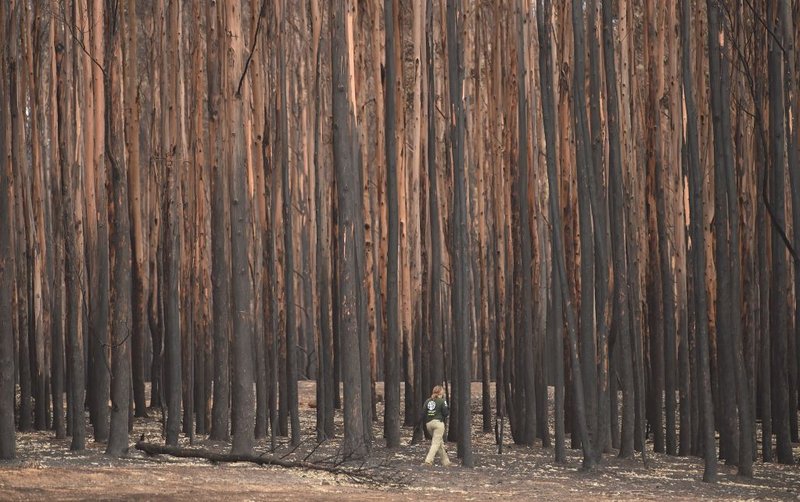
Zoonotic disease pandemics or off-the-chart bushfires fundamentally occur because of (indivisible) social, environmental and economic imbalance with equally devastating social, environmental and economic impact of intergenerational consequence. The Australian government’s SDGs uptake into national policy is common sense and must transcend partisan politics.
The vision is to ensure a sustainable, equitable, prosperous and healthy Australia for the decades ahead. The SDGs provide the map, the partnerships and the tools.
Leanne Smith , Claire E Brolan