Waiting to fill up in Dili (Valentino Dariel Sousa/AFP via Getty Images)
Greater Sunrise: the questions Woodside’s exit leaves unanswered
Timor-Leste must now bet billions of dollars to develop the giant oil and gas field on its own.
Newsletters
Subscribe to The Informer for monthly expert analysis, and to Events for advance notice of visiting world leaders and distinguished guests.
You may unsubscribe from Lowy Institute newsletters at any time. For information on our privacy practices and how to unsubscribe, see our Privacy Policy.
|Greater Sunrise: the questions Woodside’s exit leaves unanswered
Greater Sunrise: the questions Woodside’s exit leaves unanswered
Woodside Energy will exit the Greater Sunrise oil and gas project in the Timor Sea – a surprising announcement after a 25-year involvement in the development plans and recent positive signals in the press about progress. It leaves many questions, not least for Australia. Greater Sunrise has long fuelled tensions with its neighbour Timor-Leste, from espionage claims and international court cases to the standoff about whether the gas should be processed in Timor, Australia or a floating platform.
And the prospect of China getting involved has been raised before.
Woodside revealed (Opens in new window) on Tuesday it would sell its 33.44% stake in the Sunrise Joint Venture to Timor-Leste’s state-owned oil and gas company, Timor GAP, for up to US$200 million. Following Osaka Gas’s agreement to sell its 10% share in September, the Woodside transaction will give Timor GAP full ownership once both deals are completed.
Less than a fortnight ago, Timor-Leste’s President José Ramos-Horta declared that agreements for the long-stalled Greater Sunrise gas project in the Timor Sea could be signed within months. He told Australian media (Opens in new window) that the first agreements were expected early next year. The three documents – the Petroleum Mining Code, Production Sharing Contract and fiscal regime – would establish the regulatory settings needed for Australia, Timor-Leste and Woodside to develop the project.
That plan followed a cooperation agreement signed by Woodside and Timor-Leste in November 2025 to “mature and progress (Opens in new window)” a Timor-based liquefied natural gas concept. At the time, the parties said first LNG production might be possible as early as 2032–35, subject to choosing a concept and making investment decisions.
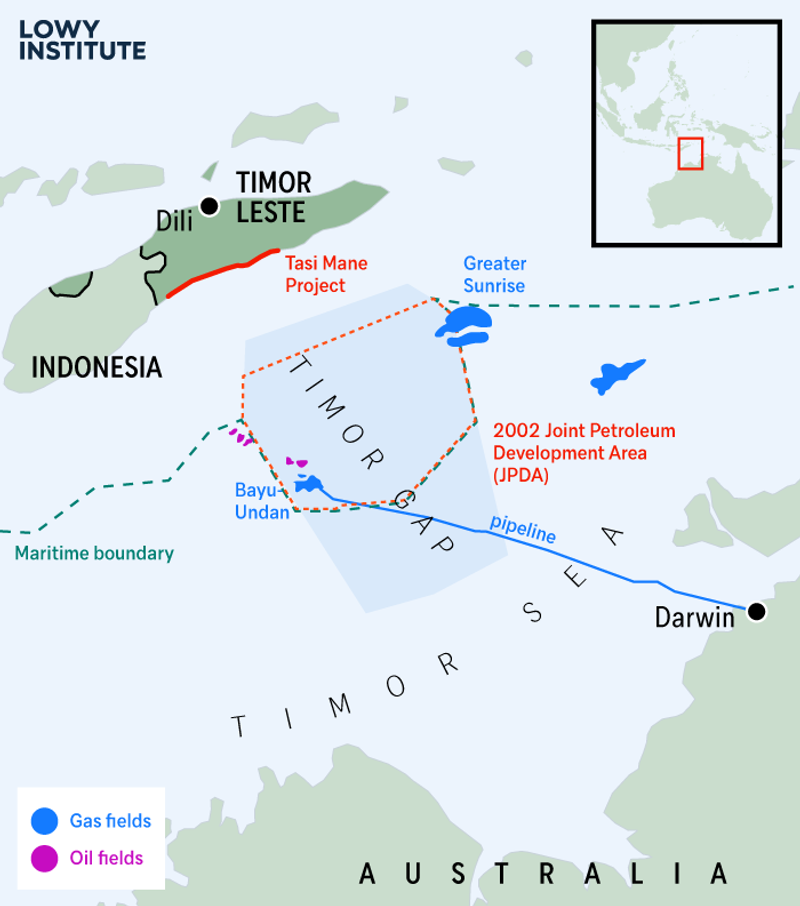
Timor-Leste's oil and gas reserves.
So what changed?
It may be that the gap between Woodside’s commercial priorities and Timor-Leste’s South Coast ambitions may have proved too wide. Analysts have been warning that the commercial elements (Opens in new window) of Timor-Leste’s plan do not stack up for at least a decade.
But how will Timor-Leste finance Greater Sunrise and its South Coast vision of establishing a pipeline, LNG plant and related infrastructure intended to create jobs and support economic development?
According to Timor GAP President and CEO Rui Soares, Woodside’s exit puts (Opens in new window) Timor-Leste “in a stronger position than ever to expedite the development of Greater Sunrise”.
A number of other questions also remain.
How much risk is Timor-Leste taking on?
The deal offers Timor-Leste greater autonomy over the project’s direction, but it also leaves the country responsible for finding partners and capital to invest into its development plan. The stakes are high. The International Monetary Fund has warned that, under current policies and without further reforms, Timor-Leste’s Petroleum Fund could be depleted in the late 2030s. Ramos-Horta has previously described the prospect of failing to develop Greater Sunrise as a “financial cliff”.
Is Woodside selling at a discount?
The headline price looks low: on a simple percentage comparison, Shell and ConocoPhillips’ 2018–19 sales imply roughly US$378–391 million for Woodside’s 33.44% stake. But most of Woodside’s maximum US$200 million payment is conditional on the project reaching production.
If Woodside is selling it cheap, why?
By offloading its stake, Woodside can redirect capital and management attention to projects it sees as less politically challenging, while Timor-Leste is now free to pursue development in the way it wants.
Does Timor-Leste have partners on board, or interested parties in financing the project? Or, more importantly, at least from Australia’s vantage point, could China become a partner?
Ramos-Horta said in 2022 that Timor-Leste would be “very interested (Opens in new window)” in Chinese financing, and in 2024 said the government had spoken with Chinese firms, including state-owned Sinopec (Opens in new window), about the project. Whether China would invest remains uncertain. Teesta Prakash and Jack Sato have argued on The Interpreter that Beijing is “unlikely (Opens in new window)” to finance Greater Sunrise, though Chinese state-owned companies have commercial interests in Timor-Leste, including infrastructure projects.
A commercial decision by the firm should not be mistaken for a decision by the Australian government.
That possibility will be watched closely in Canberra. Australia and Timor-Leste established a “New Partnership for a New Era (Opens in new window)” in January 2026, pledging to work together on the regulatory and fiscal framework for Greater Sunrise.
What does Woodside’s exit mean for that partnership?
Woodside is an Australian company, but a commercial decision by the firm should not be mistaken for a decision by the Australian government. The question is whether Australia will continue to work with Timor-Leste to make the project viable, and how it will respond if Timor-Leste seeks other partners.
What might this mean for Timor-Leste’s place in ASEAN?
As the bloc’s newest member, Timor-Leste is balancing its development needs with the foreign policy choices. Chinese involvement in Greater Sunrise could contribute to broader debates about Beijing’s influence among ASEAN member states. But it would also be a decision by a sovereign government seeking capital and partners for a project it has long regarded as central to its economic future.
Taking full control of Greater Sunrise will give Timor-Leste greater say over its development, but it also places a substantial bet on a complex project at a time when the country faces pressure to diversify its economy and manage declining petroleum income.